Your Zip Code, Your Heart: Redlining, Race-Based Medicine, and Heart Disease

- Heart disease is the leading cause of death worldwide, and Black Americans have faced a higher risk for decades — not because of their race, but because of what's been done around it.
- Redlining shaped where families could live, and research now links historically redlined neighborhoods with worse heart health today.
- Race-based medicine uses racial categories as a proxy for biology in clinical decisions. Examples include race-adjusted kidney testing and assumptions in pain assessment.
- Some of these shortcuts are being retired. Knowing which ones helps you ask better questions about your own care.
Race shouldn't determine your health. Yet in America — and in much of the world — it often does.
I've said that sentence on a stage, and I've said it in exam rooms. In both places, I watch people nod slowly, as if they've always known it but never heard a doctor say it out loud.
Last week I wrote about my father's heart failure. This week I want to zoom out from one family to the system around it — because my father's story is not a one-off. It's a pattern, and patterns have causes.
The Numbers Behind the Pattern
Heart disease is the leading cause of death globally, taking an estimated 17.9 million lives each year, according to the World Health Organization (1). In the United States, Black Americans have carried a heavier share of that burden for decades. Federal data show African Americans were about 30% more likely than non-Hispanic white Americans to die from heart disease (2).
The disparities extend well beyond the heart. Black women in the U.S. are roughly three times as likely as white women to die from pregnancy-related causes (3) — a gap that persists even among highly educated, higher-income women.
| Outcome | What the Data Show | Main Drivers Researchers Point To |
|---|---|---|
| Heart disease deaths | About 30% higher among Black vs. non-Hispanic white Americans | Higher blood pressure rates, access to care, chronic stress |
| High blood pressure | Develops earlier and more often in Black adults | Stress, neighborhood food access, salt exposure, undertreatment |
| Heart failure | Develops more often and at younger ages in Black adults | Long-standing, undertreated high blood pressure |
| Maternal deaths | About 3× higher among Black women | Dismissed symptoms, quality of care, chronic conditions |
None of those drivers is "being Black." Every one of them is something that happens *to* people.
What Redlining Has to Do With Your Heart
For readers who don't know the history: from the 1930s through the 1960s, U.S. government-backed maps graded neighborhoods by "risk" for lending. Black and minority neighborhoods were outlined in red and marked hazardous, which kept residents from getting home loans or quality housing.
That did more than segregate cities. It blocked families from building wealth through homeownership, starved neighborhoods of investment, and limited access to good schools, grocery stores, parks, and clinics. Redlining is illegal now, but the maps still echo in today's housing patterns.
And researchers can see the echo in our hearts. A study of adults in the Multi-Ethnic Study of Atherosclerosis found that people living in historically redlined areas had worse cardiovascular health scores, independent of other factors (4).
This is why I say an African American person's zip code can predict their life expectancy. Your zip code shapes:
- What food is within reach — fresh produce or fast food and corner stores
- How safe it feels to walk — and whether there are sidewalks and parks
- How much stress you carry — noise, crime, crowding, money worries
- What care is nearby — and how long you wait for it
- What's in the air and water — traffic, industry, old pipes
Your heart doesn't only respond to what you eat and how you move. It responds to where you live and what you carry. Good care takes both into account.
What Is Race-Based Medicine? Examples in Kidney Testing and Heart Care
Sociologist David R. Williams has spent decades showing how implicit bias, residential segregation, and negative stereotypes keep health disparities in place (5). But there's another layer that many patients don't know about: race-based medicine.
Legal scholar Dorothy Roberts has written about how many doctors still use race as a medical shortcut (6) — making decisions based on skin color rather than on what's actually happening in a person's body. Race is a social category, not a biological one. When it's used as a stand-in for biology, people get worse care.
Here are three examples I talk about most.
Kidney testing
For years, the standard formula for estimating kidney function (eGFR) automatically adjusted results upward for Black patients, based on an assumption that Black people have more muscle mass. That adjustment could make kidney disease look milder than it was — and delay referrals to specialists or transplant lists.
In 2021, a national task force recommended removing race from the equation, and a new race-free formula was published (7, 8). If your kidney numbers were calculated before then, it's worth asking your doctor whether they've been recalculated.
Blood pressure medications
ACE inhibitors are a common class of blood pressure medication. Because some trials found they lowered blood pressure less on their own in Black patients, some doctors have avoided prescribing them to Black people with high blood pressure.
Here's the nuance: current guidelines do suggest starting most Black adults without kidney disease on a thiazide diuretic or calcium channel blocker (9). But ACE inhibitors still protect the kidneys and heart in people with diabetes, kidney disease, or heart failure, and many Black patients do well on them. The problem isn't the guideline. It's when "Black" becomes the only question asked, instead of looking at the whole person.
Pain and dismissed symptoms
A 2016 study found that a substantial share of medical students and residents held false beliefs about biological differences between Black and white people — such as thicker skin — and those who did rated Black patients' pain lower (10). Advocates like Wanda Irving, whose daughter Dr. Shalon Irving died after childbirth, have shown how often Black women's symptoms are minimized and dismissed.
When symptoms aren't taken seriously, heart attacks get missed, high blood pressure goes undertreated, and trust erodes. And when trust erodes, people stop coming back — which feeds the cycle.
What's Changing — and What Isn't
| Practice | Old Approach | Current Direction |
|---|---|---|
| Kidney function (eGFR) | Automatic "race multiplier" for Black patients | Race-free equation recommended since 2021 |
| Blood pressure treatment | Race alone used to avoid some drug classes | Race-informed starting choice, but individualized to kidneys, heart, diabetes |
| Lung function testing | Race-specific "normal" values | Moving to race-neutral reference values |
| Pain assessment | Unexamined bias in how pain is rated | Growing training on bias; still inconsistent |
Progress is real, but uneven. Formulas change faster than habits do.
How to Advocate for Yourself (or Someone You Love)
You shouldn't have to fight for good care. But until the system catches up, these questions help:
1. "Was race used in calculating this result?" Especially for kidney or lung function.
2. "Why this medication for me, specifically?" A good answer mentions your kidneys, heart, blood sugar, or other conditions — not just your race.
3. "What else could be causing this?" If you feel dismissed, ask what's been ruled out.
4. "Can we check my blood pressure at home?" Home readings catch what a single office visit misses.
5. Bring someone. A second set of ears changes how many visits go.
6. Write symptoms down — when they started, what makes them worse — and hand the list over.
The Bottom Line
Race doesn't cause heart disease. Redlined neighborhoods, chronic stress, undertreated blood pressure, and shortcuts that use skin color instead of real data do. Naming those causes is the first step. Next week, in the last post of this series, I'll show what functional medicine does differently — looking at the whole person rather than a box on a form. You can also watch the full talk this series comes from.
For practical prevention steps, read my heart failure warning signs and family-risk story and heart health guide to lifestyle and cardiovascular risk. Individual care should account for both your measured risk and the conditions in which you live.
Products and Protocols: Test, Don't Guess
No supplement fixes a structural problem. But once testing shows a specific gap, these are the options I most often discuss, especially for people managing blood pressure and stress.
| Finding | Supplement Strategy to Discuss | My Product Pick | Recheck / Key Caution |
|---|---|---|---|
| Low magnesium or stress-linked high blood pressure | Magnesium forms that support blood vessel relaxation and sleep | Multi Mag | Avoid unsupervised use with kidney disease; recheck home blood pressure over 4–8 weeks |
| Low vitamin D (common with darker skin and less sun) | Vitamin D replacement guided by a blood level | Vitamin D3 5000 IU + K2 CAPSULES 100s | Test first; recheck level in about 3 months to avoid excess |
| High triglycerides or low omega-3 levels | Omega-3s with verified EPA/DHA content | Omega Ultra TG | Review blood-thinner use; retest lipids in 8–12 weeks |
My rule: test first, then supplement, then retest. Read my evidence-based supplement guide before buying anything.
*Affiliate disclosure: Some product links may earn us a commission at no additional cost to you. Recommendations are based on clinical use, not commissions. Read the full disclosure.*
Never stop or swap a blood pressure medication on your own, and check with your clinician before adding supplements if you have kidney disease or take blood thinners.
References
- World Health Organization. Cardiovascular diseases (CVDs) fact sheet. https://www.who.int/news-room/fact-sheets/detail/cardiovascular-diseases-(cvds)
- U.S. Department of Health and Human Services, Office of Minority Health. Heart Disease and African Americans. https://minorityhealth.hhs.gov/heart-disease-and-african-americans
- Hoyert DL. Maternal mortality rates in the United States, 2021. NCHS Health E-Stats. 2023. https://dx.doi.org/10.15620/cdc:124678
- Mujahid MS, Gao X, Tabb LP, et al. Historical redlining and cardiovascular health: The Multi-Ethnic Study of Atherosclerosis. PNAS. 2021;118(51):e2110986118. https://doi.org/10.1073/pnas.2110986118
- Williams DR, Mohammed SA. Racism and health I: pathways and scientific evidence. American Behavioral Scientist. 2013;57(8):1152-1173. https://doi.org/10.1177/0002764213487340
- Roberts D. Fatal Invention: How Science, Politics, and Big Business Re-create Race in the Twenty-First Century. New Press; 2011. https://newpress.com/books/fatal-invention
- Delgado C, Baweja M, Crews DC, et al. A unifying approach for GFR estimation: recommendations of the NKF-ASN Task Force. Journal of the American Society of Nephrology. 2021;32(12):2994-3015. https://doi.org/10.1681/ASN.2021070988
- Inker LA, Eneanya ND, Coresh J, et al. New creatinine- and cystatin C–based equations to estimate GFR without race. New England Journal of Medicine. 2021;385(19):1737-1749. https://doi.org/10.1056/NEJMoa2102953
- Whelton PK, Carey RM, Aronow WS, et al. 2017 ACC/AHA Guideline for the Prevention, Detection, Evaluation, and Management of High Blood Pressure in Adults. Hypertension. 2018;71(6):e13-e115. https://doi.org/10.1161/HYP.0000000000000065
- Hoffman KM, Trawalter S, Axt JR, Oliver MN. Racial bias in pain assessment and treatment recommendations. PNAS. 2016;113(16):4296-4301. https://doi.org/10.1073/pnas.1516047113
Supplements for Heart Health
Clinical-grade picks for this topic
Affiliate disclosure: The product links below are affiliate links — we may earn a commission at no extra cost to you. Recommendations are based on clinical use, not commissions. Learn more.
Frequently Asked Questions
Common questions about your zip code, your heart: redlining, race-based medicine, and heart disease
Recommended Products & Supplements
Explore wellness devices alongside professional-grade supplements from MaxHealth Nutraceuticals.
Ask your clinician whether these products are appropriate for you. Devices and supplements do not replace prescribed treatment; do not stop or change medications without medical guidance.

RESPeRATE Deluxe Duo

Inner Balance™ Coherence Plus
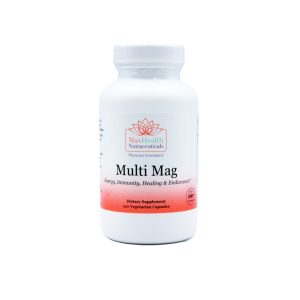
Multi Mag

Vitamin D3 5000 IU + K2 CAPSULES 100s

Omega Ultra TG
Disclosure: This post contains affiliate links. If you purchase through these links, we may earn a small commission at no extra cost to you. Learn more.
About the Author
Dr. Nicolle is a double board-certified physician in Family Medicine and Preventive Medicine, with certifications in Functional Medicine and Lifestyle Medicine. She helps busy professionals over 40 optimize their health through root-cause approaches to cardiovascular, hormonal, and metabolic health.
Learn more about Dr. Nicolle →Explore Related Topics
Dive deeper into these connected health areas
Hormone Health
Hormones are the chemical messengers that regulate virtually every process in your body — from metab…
Explore 🦠Gut Health
Your gut is far more than a digestive organ — it's home to 70% of your immune system, produces key n…
Explore ❤️Metabolic Health
Metabolic health sits at the intersection of blood sugar regulation, cardiovascular function, body c…
Explore 🌸Women's Health
Women's health encompasses a complex interplay of hormonal cycles, reproductive biology, and unique …
Explore 💪Men's Health
Men's health involves a unique interplay of hormonal balance, cardiovascular resilience, metabolic e…
Explore 🧠Mental Health
Mental health is deeply interconnected with hormonal balance, gut health, blood sugar regulation, an…
Explore 📖Skin & Hair Health
Your skin and hair are windows into your internal health. Chronic acne, eczema, psoriasis, and hair …
ExploreReady to Address Your Health Concerns?
Book a Discovery Offer consultation to discuss how our functional medicine approach can help you achieve your health goals.
Join the Waitlist