Vagal Tone & Gut Health: The Nervous System's Role in Digestion

- Most chronic 'functional' digestive symptoms over 40 are autonomic nervous-system problems wearing a digestive costume — they survive every clean GI workup and resist every elimination diet
- Vagal tone is measurable (HRV/RMSSD), and an RMSSD consistently below 30 ms reframes a workup-negative GI case as an autonomic problem upstream of the gut
- Slow-paced breathing at ~5.5 breaths/min, cold and heat exposure, sleep consolidation, Zone 2 cardio, and HRV biofeedback reliably rebuild vagal tone in 8-12 weeks
- Supplements support the gut while the nervous system rebuilds — they don't fix vagal tone on their own; the order of operations matters
A 47-year-old patient came to me after two years of escalating bloating, reflux, and "IBS-D" — three GI workups, two endoscopies, four elimination diets, and one diagnosis of "functional dyspepsia, no structural cause." Her gastroenterologist had been thorough and kind, and entirely correct that nothing was structurally wrong. What no one had measured was her vagal tone. Her morning HRV was 18 ms — roughly half of what I'd expect for her age — and her resting respiratory rate was 22. We didn't change her diet for the first six weeks. We worked on her nervous system. By week eight, her HRV was 34 ms, her reflux had resolved, and her stools were formed for the first time in three years.
This pattern is not unusual. In a midlife GI practice, a meaningful share of "functional" digestive symptoms are nervous-system problems wearing a digestive costume — and they remain unfixable until the autonomic piece is addressed. The vagus nerve is the bidirectional cable between the brain and almost every digestive organ. It governs gastric motility, pancreatic and bile secretion, intestinal contractions, the gut microbiome's composition, and the integrity of the intestinal barrier. When vagal tone falls — and it reliably does with chronic stress, poor sleep, perimenopause, and aging — the gut develops symptoms that no diet alone can resolve.
This is the framework I use to evaluate and rebuild vagal tone, and the protocols I write for the patients whose digestive systems have stopped responding to food-based interventions.
What Vagal Tone Actually Is — and How to Measure It
Vagal tone refers to the activity of the vagus nerve at rest, primarily its parasympathetic ("rest, digest, repair") output to the heart, lungs, and digestive tract. It's not a metaphor — it's a measurable signal, and the most practical proxy for it is heart rate variability (HRV), specifically the time-domain measure RMSSD.
The clinically relevant reference points I use:
- RMSSD > 50 ms in midlife adults is generally robust parasympathetic tone
- RMSSD 30-50 ms is functional but with reduced reserve
- RMSSD < 30 ms consistently correlates with symptomatic dysautonomia, including GI symptoms
- A drop of >1 SD from a 60-day personal baseline is more meaningful than any absolute number
The drivers of low vagal tone in midlife are predictable: chronic psychological stress, poor sleep architecture, perimenopausal/andropausal hormone shifts, sedentary patterns, alcohol, untreated obstructive sleep apnea, and the inflammatory burden of a dysbiotic gut microbiome. Most of my patients with chronic digestive complaints have several of these stacked.
If you measure one thing in a patient with chronic, workup-negative GI symptoms over 40, measure HRV trend for 30 days. A consistent RMSSD below 30 ms reframes the case — the digestive symptoms are downstream of an autonomic problem, and food-based interventions alone will keep failing.
How Low Vagal Tone Produces Digestive Symptoms
The mechanistic chain from autonomic dysregulation to gut symptoms is well-mapped:
- Delayed gastric emptying → early satiety, bloating, reflux, nausea
- Reduced migrating motor complex activity → small intestinal bacterial overgrowth (SIBO)
- Hypochlorhydria from sympathetic dominance → protein maldigestion, mineral malabsorption, food sensitivities
- Insufficient pancreatic enzyme and bile output → fat malabsorption, steatorrhea, fat-soluble vitamin deficiency
- Increased intestinal permeability ("leaky gut") → systemic inflammation, food reactivity, autoimmunity
- Altered microbiome composition → reduced microbial diversity, lower short-chain fatty acid production, mood symptoms
- Visceral hypersensitivity → pain and bloating disproportionate to objective findings
This is why the same patient often has reflux, bloating, irregular stools, food sensitivities, and anxiety simultaneously — they're all expressions of a single upstream problem. Addressing each symptom in isolation rarely works.
The 12-Week Vagal-Gut Rebuild Protocol
The structured protocol I most often write for patients with workup-negative GI symptoms and confirmed low HRV. It assumes a baseline GI workup has already excluded structural disease, celiac, IBD, and active infection.
| Phase | Weeks | Vagal Inputs | Gut Inputs | Measurement |
|---|---|---|---|---|
| Foundation | 1-3 | Daily 10-min coherence breathing; sleep window enforced; alcohol removed | Hydration, regular meal timing, remove obvious triggers | HRV daily, symptom diary |
| Activation | 4-6 | Add cold exposure (face plunge or 30-sec cold shower); gargling; humming/chanting 5 min/day | Add bone broth or collagen; targeted digestive bitters before meals | Weekly HRV trend |
| Repair | 7-9 | Add sauna sessions 2-3x/week; structured outdoor time | L-glutamine, zinc carnosine, targeted probiotic strain | Re-test stool markers if available |
| Integration | 10-12 | Maintain core practices; add HRV biofeedback if not improving | Re-introduce foods systematically; assess for residual SIBO | Compare to baseline HRV and symptom score |
The non-negotiables: a sleep window of at least 7.5 hours in bed, no alcohol during the 12-week block, daily HRV measurement, and 10 minutes per day of structured slow-paced breathing at approximately 5.5 breaths per minute (the resonance frequency at which HRV is maximally amplified).
The Highest-Yield Vagal Tone Interventions
In rough order of evidence base and clinical effect size:
- Slow-paced breathing at resonance frequency (~5.5 breaths/min). The single most effective acute and chronic vagal intervention available. 10 minutes/day, ideally with HRV biofeedback for the first 4 weeks.
- Cold exposure. Facial cold (20-30 seconds in cold water, the "mammalian dive reflex") produces an immediate vagal surge. Brief whole-body cold exposure, done safely, reliably builds vagal tone over weeks.
- Sauna/heat exposure. Heat acclimation improves HRV and gut blood flow. See our contrast therapy guide for safe dosing.
- Singing, humming, gargling, chanting. All directly stimulate vagal afferents via the laryngeal branches. Cheap, free, and underused.
- Aerobic exercise in Zone 2. Builds vagal tone faster than high-intensity work; HIIT in excess can suppress HRV.
- Sleep — specifically the consolidation of REM and slow-wave sleep. Untreated sleep apnea will defeat every other intervention on this list.
- HRV biofeedback. A few weeks of structured biofeedback produces measurable, durable improvements in vagal tone in most patients.
- Time in nature, structured social connection, laughter, prayer or meditation. Real, measurable, often dismissed.
Where Supplements and Tools Earn Their Place
Supplements don't fix vagal tone, but they support the gut while you rebuild the nervous system. The stack I most commonly use:
- GI Soothe (Powder) 168 Grams — L-glutamine, zinc carnosine, and mucosal support for intestinal barrier repair while motility returns
- Probiotic 40 Billion CFU — broad-spectrum support during the repair phase; specific strains can be layered later
- Multi Mag — magnesium glycinate and threonate for parasympathetic support, sleep, and bowel motility
- Adrenal (Energy & Stress) 120 Capsules — adaptogenic HPA-axis support during the rebuild
- Omega Ultra TG — anti-inflammatory support for mucosal repair and vagal nerve function
- B Coenzyme Methyl Complex — methylated B vitamins for neurotransmitter and mitochondrial support
- 5-HTP 90s (with P5P & Glycine) — supports serotonin (95% of which is gut-derived) and sleep architecture
- Mood Boost 120s — for the anxiety/low-mood symptoms that frequently co-travel
- Digestive Enzymes — bridge support while endogenous secretion recovers
The equipment and tools that earn their place during a structured vagal rebuild:
- Inner Balance™ Coherence Plus — the single most useful tool in this entire protocol; real-time HRV biofeedback that makes slow-paced breathing easy to dose correctly
- TheraFrost Cold Plunge — for structured, safe cold exposure
- Thera360 PLUS Portable Sauna — for the heat exposure component
- SMART Yoga Mat (Green) — for daily mobility and breathing practice
- Austin Air HealthMate Plus® — chronic indoor air pollutant load is a real, often-missed driver of low-grade inflammation that suppresses HRV
When to Escalate Beyond Lifestyle
If 12 weeks of structured vagal and gut rebuild has produced no measurable HRV improvement and no symptomatic relief, the next steps include: formal sleep study to rule out OSA, comprehensive stool testing for residual dysbiosis or SIBO, lab evaluation for thyroid and adrenal dysfunction, perimenopause/andropause hormonal evaluation, and consideration of transcutaneous vagus nerve stimulation devices. A subset of patients with severe, treatment-resistant dysautonomia warrant cardiology and neurology evaluation.
A Realistic Closing
Most chronic digestive symptoms over 40 that survive a clean GI workup are autonomic problems first and digestive problems second. The order of operations matters: rebuild the nervous system, support the gut while you do, and the symptoms that have resisted every elimination diet often resolve in 8-12 weeks. The work is unglamorous — breath, sleep, cold, heat, restraint with alcohol, daily measurement — but it works in a way that another supplement bottle or another diet rarely does.
If you'd like a personalized vagal tone and gut rebuild protocol matched to your HRV, symptoms, and labs, take our Wellness Quiz to map your starting point, or book a Discovery Offer to review your case with me directly.
---
References
- Bonaz, B., Bazin, T., & Pellissier, S. (2018). The vagus nerve at the interface of the microbiota-gut-brain axis. Frontiers in Neuroscience, 12, 49. https://doi.org/10.3389/fnins.2018.00049
- Breit, S., Kupferberg, A., Rogler, G., & Hasler, G. (2018). Vagus nerve as modulator of the brain-gut axis in psychiatric and inflammatory disorders. Frontiers in Psychiatry, 9, 44. https://doi.org/10.3389/fpsyt.2018.00044
- Lehrer, P.M., & Gevirtz, R. (2014). Heart rate variability biofeedback: how and why does it work? Frontiers in Psychology, 5, 756. https://doi.org/10.3389/fpsyg.2014.00756
- Pellissier, S., et al. (2014). Relationship between vagal tone, cortisol, TNF-alpha, epinephrine and negative affects in Crohn's disease and irritable bowel syndrome. PLoS ONE, 9(9), e105328. https://doi.org/10.1371/journal.pone.0105328
- Mayer, E.A., Tillisch, K., & Gupta, A. (2015). Gut/brain axis and the microbiota. Journal of Clinical Investigation, 125(3), 926-938. https://doi.org/10.1172/JCI76304
Supplements for Functional Wellness
Clinical-grade picks for this topic

Inner Balance™ Coherence Plus
$249.00

TheraFrost Cold Plunge
$4,988.00

Thera360 PLUS Portable Sauna
$1,428.00
Affiliate disclosure: The product links below are affiliate links — we may earn a commission at no extra cost to you. Recommendations are based on clinical use, not commissions. Learn more.
Frequently Asked Questions
Common questions about vagal tone & gut health: the nervous system's role in digestion
Recommended Supplements
Professional-grade supplements from my MaxHealth Nutraceuticals line — the same formulas I use in clinical practice.
Inner Balance™ Coherence Plus
TheraFrost Cold Plunge
Thera360 PLUS Portable Sauna

SMART Yoga Mat (Green)

Austin Air HealthMate Plus®
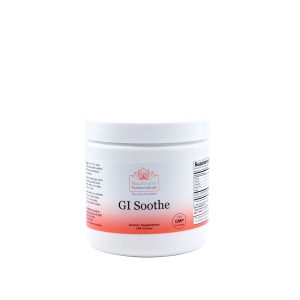
GI Soothe (Powder) 168 Grams

Probiotic 40 Billion CFU – 60s (shelf stable)

Multi Mag
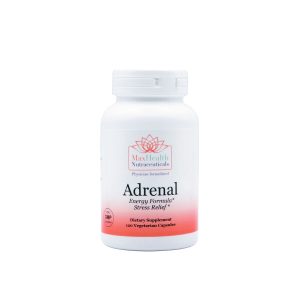
Adrenal (Energy & Stress) 120 Capsules

Omega Ultra TG
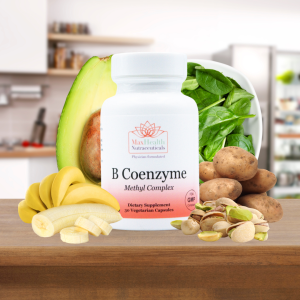
B Coenzyme Methyl Complex

5-HTP 90s (with P5P & Glycine)
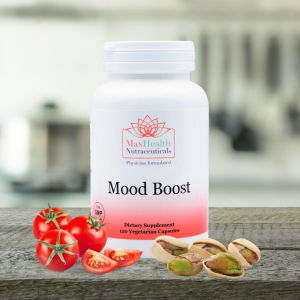
Mood Boost 120s
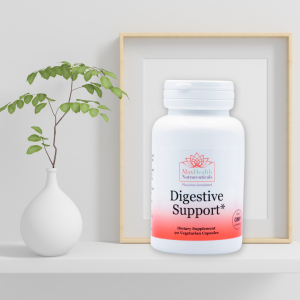
Digestive Support 90s
Disclosure: This post contains affiliate links. If you purchase through these links, we may earn a small commission at no extra cost to you. Learn more.
About the Author
Dr. Nicolle is a double board-certified physician in Family Medicine and Preventive Medicine, with certifications in Functional Medicine and Lifestyle Medicine. She helps busy professionals over 40 optimize their health through root-cause approaches to cardiovascular, hormonal, and metabolic health.
Learn more about Dr. Nicolle →Explore Related Topics
Dive deeper into these connected health areas
Hormone Health
Hormones are the chemical messengers that regulate virtually every process in your body — from metab…
Explore 🦠Gut Health
Your gut is far more than a digestive organ — it's home to 70% of your immune system, produces key n…
Explore ❤️Metabolic Health
Metabolic health sits at the intersection of blood sugar regulation, cardiovascular function, body c…
Explore 🌸Women's Health
Women's health encompasses a complex interplay of hormonal cycles, reproductive biology, and unique …
Explore 💪Men's Health
Men's health involves a unique interplay of hormonal balance, cardiovascular resilience, metabolic e…
Explore 🧠Mental Health
Mental health is deeply interconnected with hormonal balance, gut health, blood sugar regulation, an…
Explore 📖Skin & Hair Health
Your skin and hair are windows into your internal health. Chronic acne, eczema, psoriasis, and hair …
ExploreReady to Address Your Health Concerns?
Book a Discovery Offer consultation to discuss how our functional medicine approach can help you achieve your health goals.
Book Your Discovery Offer