Rethinking Cholesterol: Lipid Optimization & Heart Disease Prevention

- Standard LDL cholesterol tells you almost nothing about your actual cardiovascular risk. LDL particle number, size, and ApoB are far better predictors
- Atherosclerosis is fundamentally an inflammatory disease, not a cholesterol disease. Inflammation markers like hs-CRP and homocysteine belong in every cardiac risk assessment
- Lipoprotein(a) affects 1 in 5 people, dramatically increases risk, and doesn't respond to diet or statins. Every adult should have it tested once
- Insulin resistance is the most common root cause of atherogenic lipid patterns (high triglycerides, low HDL, small dense LDL). Fixing metabolic health often fixes the lipid profile
- Berberine, omega-3s, citrus bergamot, and strategic exercise can produce significant lipid improvements before considering medication
Sarah, 52, came to our practice holding a prescription for atorvastatin she hadn't filled. Her total cholesterol was 237. Her primary care physician told her it was too high and that she needed medication. End of conversation.
When I reviewed her full history, the picture was far more nuanced. Her HDL was 78 (excellent). Her triglycerides were 68 (excellent). Her family history was unremarkable. She exercised regularly, ate well, and had no diabetes, no hypertension, and no inflammation on testing. Her LDL of 142 had prompted the prescription, but that single number, taken out of context, was driving a decision that would affect the next 30 years of her life.
When we ran advanced lipid testing, her LDL particle number was low, her particles were large and buoyant (the less dangerous pattern), her Lp(a) was normal, and her ApoB was well within optimal range. Her actual cardiovascular risk was low. She didn't need a statin. She needed a doctor willing to look deeper than a single number.
This story plays out thousands of times every day. Cholesterol management in conventional medicine has been reduced to a formula: high LDL equals statin. But cardiovascular disease is far more complex than that, and the standard lipid panel misses most of what actually matters.
Why Your Standard Lipid Panel Is Incomplete
The lipid panel your doctor orders measures four things: total cholesterol, LDL cholesterol, HDL cholesterol, and triglycerides. This test was developed in the 1970s and hasn't meaningfully changed since.
Here's what it doesn't tell you:
- How many LDL particles you have (particle number matters more than cholesterol concentration)
- What size your LDL particles are (small, dense particles are far more atherogenic than large, buoyant ones)
- Whether your LDL is oxidized (oxidized LDL causes arterial damage; unoxidized LDL generally does not)
- Your Lipoprotein(a) level (a genetically determined risk factor affecting 20% of the population)
- Your ApoB concentration (the single best predictor of cardiovascular events)
It's like assessing traffic safety by counting the total number of vehicles on the road without knowing whether they're sedans or semi-trucks, whether they're following traffic laws, or whether the road conditions are hazardous.
A "high" LDL cholesterol number without context is almost meaningless. Two patients with identical LDL levels can have vastly different cardiovascular risk profiles based on particle number, particle size, oxidation status, and inflammatory markers.
Understanding LDL Particles: Size and Number
This is where most cholesterol conversations go wrong. Standard testing measures LDL *cholesterol*, which is the amount of cholesterol carried inside LDL particles. But what actually damages arteries is the LDL *particles* themselves.
Think of it this way: imagine you need to transport a fixed amount of cargo across a river. You could use a few large boats (fewer particles, each carrying more cholesterol) or many small boats (more particles, each carrying less). The total cargo is the same, but the traffic on the river is very different.
Pattern A (large, buoyant LDL): Fewer particles, each carrying more cholesterol. These particles are too large to easily penetrate the arterial wall. Associated with lower cardiovascular risk.
Pattern B (small, dense LDL): More particles, each carrying less cholesterol. These smaller particles penetrate the arterial wall more easily, are more susceptible to oxidation, and stay in circulation longer. Associated with significantly higher cardiovascular risk.
A patient with an LDL of 130 could have Pattern A (low risk) or Pattern B (high risk). The standard lipid panel can't distinguish between them.
The Tests That Actually Matter
NMR LipoProfile or Ion Mobility: These advanced tests measure:
- LDL particle number (LDL-P): Optimal is below 1000 nmol/L. This is a stronger predictor of cardiovascular events than LDL cholesterol
- Small dense LDL particles: Ideally below 20% of total LDL particles
- LDL particle size: Larger is generally better
ApoB (Apolipoprotein B): Every atherogenic particle (LDL, VLDL, IDL, Lp(a)) carries exactly one ApoB molecule. So ApoB directly counts your total atherogenic particle burden. Optimal is below 80 mg/dL, with below 60 mg/dL ideal for high-risk patients. Many cardiologists now consider ApoB the single most useful lipid marker (1).
Lipoprotein(a) [Lp(a)]: This is genetically determined, present in about 20% of the population, and dramatically increases cardiovascular risk. It should be tested once in every adult's lifetime. Levels above 50 nmol/L (or 30 mg/dL) significantly increase risk. Unlike LDL, Lp(a) doesn't respond meaningfully to diet or statins. If you've never had it tested, ask your doctor at your next visit.
ApoB is emerging as the preferred single lipid marker among cardiovascular researchers. It captures all atherogenic particles in one number and is a stronger predictor of heart attacks and strokes than LDL cholesterol, non-HDL cholesterol, or triglycerides alone.
The Inflammation Connection
Here's what most cholesterol conversations miss entirely: atherosclerosis is fundamentally an *inflammatory* disease, not a cholesterol disease. LDL particles don't just passively float into arteries. The process requires arterial wall damage, typically driven by:
- Chronic systemic inflammation (elevated hs-CRP, homocysteine)
- Oxidative stress (which converts normal LDL into oxidized LDL, the form that macrophages engulf to form foam cells)
- Endothelial dysfunction (damaged arterial lining from hyperglycemia, hypertension, smoking, or chronic stress)
- Insulin resistance (which independently promotes atherogenesis and shifts LDL particles toward the small, dense pattern)
This is why some people with "high" cholesterol never develop heart disease, while others with "normal" cholesterol have heart attacks. The cholesterol number alone doesn't account for the inflammatory and metabolic environment.
Key inflammatory markers to test alongside lipids:
- hs-CRP (optimal: below 1.0 mg/L): The most validated marker of cardiovascular inflammation
- Homocysteine (optimal: below 8 μmol/L): Elevated levels damage the endothelium and increase clotting risk
- Oxidized LDL: Measures the LDL fraction actually causing damage
- Fibrinogen: A clotting factor that also reflects inflammation
| Marker | Standard Panel | Advanced Panel | Why It Matters |
|---|---|---|---|
| LDL Cholesterol | ✅ Included | ✅ Included | Measures cholesterol content, not particle risk |
| LDL Particle Number | ❌ Not tested | ✅ NMR LipoProfile | Stronger predictor than LDL-C alone |
| LDL Particle Size | ❌ Not tested | ✅ NMR LipoProfile | Small dense = higher risk |
| ApoB | ❌ Not tested | ✅ Included | Best single predictor of CV events |
| Lp(a) | ❌ Not tested | ✅ Tested once | Genetic risk in 20% of population |
| hs-CRP | ❌ Not tested | ✅ Included | Systemic inflammation marker |
| Oxidized LDL | ❌ Not tested | ✅ Included | The LDL causing actual damage |
| Homocysteine | ❌ Not tested | ✅ Included | Endothelial damage + clotting risk |
The Statin Conversation: When They Help and When They Don't
Let me be clear: statins save lives. In the right patient, they are among the most evidence-backed medications in cardiology. The problem isn't statins themselves. It's the one-size-fits-all approach to prescribing them.
When statins are strongly indicated:
- Secondary prevention: You've already had a cardiovascular event (heart attack, stroke, stent). The evidence here is overwhelming
- Familial hypercholesterolemia: Genetically driven extreme LDL elevation
- Very high ApoB or LDL-P combined with inflammatory markers or other risk factors
- Elevated Lp(a) with additional risk factors (statins don't lower Lp(a), but they reduce overall particle burden)
When the decision is more nuanced:
- Primary prevention in lower-risk patients: The benefit is smaller and must be weighed against side effects
- Elevated LDL with Pattern A particles, low inflammation, and no other risk factors (Sarah's situation)
- Women under 65 without prior cardiovascular events: The primary prevention data for statins in this population is weaker than commonly presented
- Patients with statin intolerance: Muscle pain, cognitive issues, and blood sugar elevation affect a meaningful percentage of patients
Never stop or refuse a statin prescription without discussing it with your physician. If you have questions about whether a statin is appropriate for you, request advanced lipid testing and inflammatory markers to make a more informed decision together with your doctor.
A Functional Medicine Approach to Lipid Optimization
Whether or not a statin is appropriate, these foundational strategies address the root causes of atherogenic lipid profiles and cardiovascular inflammation.
1. Address Insulin Resistance First
This is the most overlooked driver of dyslipidemia. Insulin resistance creates the classic atherogenic lipid pattern: high triglycerides, low HDL, and small dense LDL particles. You can't meaningfully fix your lipid profile without fixing your metabolic health.
Key strategies:
- Reduce refined carbohydrates and added sugars (the primary dietary drivers of triglycerides and small dense LDL)
- Prioritize protein and healthy fats at every meal to stabilize blood sugar
- Build muscle through resistance training (muscle is your largest glucose disposal organ)
- Consider time-restricted eating if metabolically appropriate
2. Optimize Your Dietary Fat Profile
Contrary to outdated dietary advice, dietary cholesterol has minimal impact on blood cholesterol for most people. The 2015-2020 Dietary Guidelines removed the cholesterol intake cap because the evidence didn't support it (2). What matters more:
- Increase omega-3 fatty acids: Wild-caught fatty fish 2-3 times weekly, plus supplementation to achieve an Omega-3 Index above 8%. Omega-3s reduce triglycerides, improve HDL function, and reduce arterial inflammation
- Use olive oil liberally: Rich in oleic acid and polyphenols that reduce oxidized LDL and improve endothelial function
- Minimize industrial seed oils: Soybean, corn, canola, and sunflower oils are high in omega-6 fatty acids, which promote inflammation when consumed in excess relative to omega-3s
- Include nuts daily: Almonds, walnuts, and pistachios consistently reduce LDL-P and ApoB in clinical trials
3. Leverage Targeted Nutraceuticals
Several supplements have strong evidence for lipid optimization. These aren't replacements for medication when medication is indicated, but they're valuable tools:
- Berberine (500 mg 2-3x daily): Activates AMPK, reduces LDL by 20-30% in studies, improves insulin sensitivity. Often called "nature's metformin" (3)
- Citrus bergamot (500-1000 mg daily): Reduces total cholesterol and LDL while improving the LDL particle size profile
- Red yeast rice (1200 mg daily): Contains natural lovastatin. Effective but should be used under medical supervision due to the same mechanism as statin drugs
- Omega-3 EPA/DHA (2-4 g daily): Primarily reduces triglycerides and improves HDL particle function
- Plant sterols/stanols (2 g daily): Block intestinal cholesterol absorption, reducing LDL by 6-15%
- Niacin (vitamin B3): Increases HDL, lowers Lp(a), and shifts LDL particles from small to large. Must be used under medical supervision due to flushing and liver monitoring requirements
Berberine is one of the most underutilized tools in lipid management. Multiple meta-analyses show it reduces LDL cholesterol by 20-30%, lowers triglycerides, improves insulin sensitivity, and has anti-inflammatory effects. For patients who can't tolerate statins or don't meet the threshold for medication, it's a legitimate first-line consideration.
4. Exercise Strategically
Exercise has a powerful effect on lipid profiles, but the type matters:
- Resistance training increases HDL, reduces triglycerides, and improves insulin sensitivity. Aim for 3-4 sessions weekly
- Zone 2 aerobic training (conversational pace, sustained effort) improves mitochondrial fat oxidation and reduces triglyceride-rich lipoproteins. Aim for 150+ minutes weekly
- High-intensity intervals improve HDL functionality and reduce inflammatory markers
The combination of resistance training plus Zone 2 cardio produces the most favorable lipid changes. Exercise alone can shift LDL particles from Pattern B to Pattern A (4).
5. Manage Inflammation and Stress
Because atherosclerosis is an inflammatory process, managing systemic inflammation directly reduces cardiovascular risk:
- Optimize sleep: Poor sleep increases hs-CRP, elevates cortisol (which raises LDL), and worsens insulin resistance. Aim for 7-8 hours of quality sleep
- Manage chronic stress: Sustained cortisol elevation raises LDL, triglycerides, and blood pressure while lowering HDL
- Reduce inflammatory dietary triggers: Processed foods, excess sugar and alcohol, and individual food sensitivities
- Support gut health: Gut inflammation and endotoxemia (bacterial toxins leaking into the bloodstream) directly contribute to arterial inflammation
Your Lipid Optimization Action Plan
Step 1: Get the right tests
Request advanced lipid testing (NMR LipoProfile or Ion Mobility), ApoB, Lp(a) (once is enough), hs-CRP, homocysteine, fasting insulin, and HbA1c. This gives you the complete picture.
Step 2: Interpret in context
Work with a practitioner who understands advanced lipid interpretation. An LDL of 150 with Pattern A particles, low ApoB, normal Lp(a), and no inflammation is fundamentally different from an LDL of 120 with Pattern B particles, high ApoB, elevated Lp(a), and an hs-CRP of 3.5.
Step 3: Address root causes
Fix insulin resistance, optimize dietary fat quality, reduce inflammation, exercise strategically, and manage stress before defaulting to medication. Many patients can achieve dramatic lipid improvements through these foundational strategies.
Step 4: Reassess and adjust
Retest in 90 days. If advanced markers remain concerning despite lifestyle optimization, discuss targeted nutraceuticals or medication with your physician. The goal is informed decision-making, not ideology.
---
Heart disease remains the leading cause of death in the United States. But the standard approach to prevention — a basic lipid panel and a statin prescription — misses most of what actually drives risk. You deserve a more complete picture.
Our Discovery Offer includes advanced cardiovascular risk assessment, lipid particle analysis, and a personalized optimization strategy built around your actual risk factors, not just a single number on a lab report.
Your heart health is too important for shortcuts.
---
References
- Sniderman, A.D., et al. (2021). Apolipoprotein B particles and cardiovascular disease: A narrative review. JAMA Cardiology, 6(12), 1315-1325.
- U.S. Department of Health and Human Services. (2015). Dietary Guidelines for Americans 2015-2020. 8th Edition.
- Lan, J., et al. (2015). Meta-analysis of the effect and safety of berberine in the treatment of type 2 diabetes mellitus, hyperlipemia and hypertension. Journal of Ethnopharmacology, 161, 69-81.
- Kraus, W.E., et al. (2002). Effects of the amount and intensity of exercise on plasma lipoproteins. New England Journal of Medicine, 347(19), 1483-1492.
- Nordestgaard, B.G., et al. (2010). Lipoprotein(a) as a cardiovascular risk factor: current status. European Heart Journal, 31(23), 2844-2853.
- Otvos, J.D., et al. (2011). Clinical implications of discordance between LDL cholesterol and LDL particle number. Journal of Clinical Lipidology, 5(2), 105-113.
- Ridker, P.M. (2016). From C-reactive protein to interleukin-6 to interleukin-1: Moving upstream to identify the true drivers of vascular risk. Circulation Research, 118(1), 145-156.
Supplements for Heart Health
Clinical-grade picks for this topic
Affiliate disclosure: The product links below are affiliate links — we may earn a commission at no extra cost to you. Recommendations are based on clinical use, not commissions. Learn more.
Frequently Asked Questions
Common questions about rethinking cholesterol: lipid optimization & heart disease prevention
Recommended Supplements
Professional-grade supplements from my MaxHealth Nutraceuticals line — the same formulas I use in clinical practice.

RESPeRATE Deluxe Duo
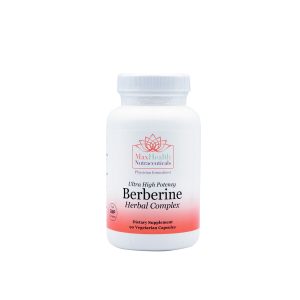
Berberine Herbal Complex 90s
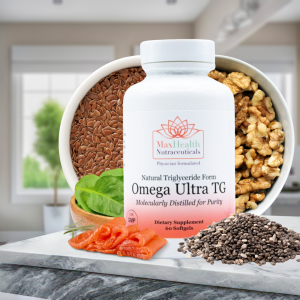
Omega Ultra TG
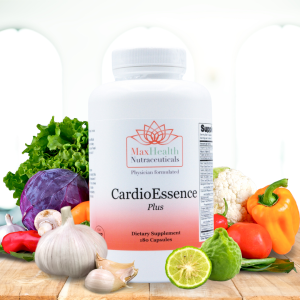
CardioEssence Plus
CoQ10
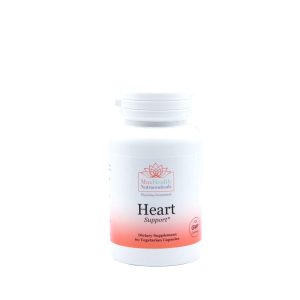
Heart Support 60s
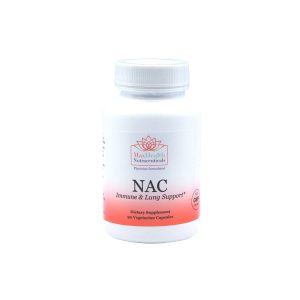
NAC 90s
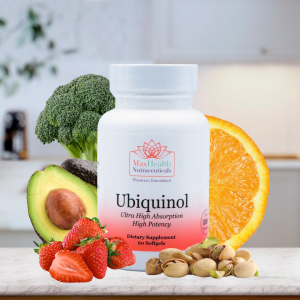
Ubiquinol 100mg 60s
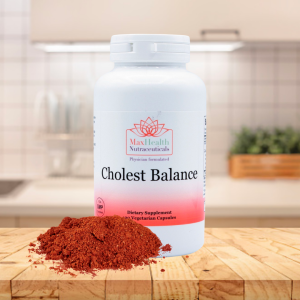
Cholest Balance 120s
Fiber Powder 200 Grams

Healthy Heart Bundle
Disclosure: This post contains affiliate links. If you purchase through these links, we may earn a small commission at no extra cost to you. Learn more.
About the Author
Dr. Nicolle is a double board-certified physician in Family Medicine and Preventive Medicine, with certifications in Functional Medicine and Lifestyle Medicine. She helps busy professionals over 40 optimize their health through root-cause approaches to cardiovascular, hormonal, and metabolic health.
Learn more about Dr. Nicolle →Explore Related Topics
Dive deeper into these connected health areas
Hormone Health
Hormones are the chemical messengers that regulate virtually every process in your body — from metab…
Explore 🦠Gut Health
Your gut is far more than a digestive organ — it's home to 70% of your immune system, produces key n…
Explore 🌸Women's Health
Women's health encompasses a complex interplay of hormonal cycles, reproductive biology, and unique …
Explore 🧠Mental Health
Mental health is deeply interconnected with hormonal balance, gut health, blood sugar regulation, an…
Explore 📖Skin & Hair Health
Your skin and hair are windows into your internal health. Chronic acne, eczema, psoriasis, and hair …
ExploreReady to Address Your Health Concerns?
Book a Discovery Offer consultation to discuss how our functional medicine approach can help you achieve your health goals.
Book Your Discovery Offer