Seed Cycling for Hormonal Balance: Does It Actually Work?

- Seed cycling uses specific seeds in each menstrual phase to support estrogen and progesterone balance
- No RCTs exist for the full protocol, but individual seed components have solid research support
- Flaxseed lignans modulate estrogen; pumpkin seed zinc supports ovulation and progesterone
- It's low-risk and inexpensive — worth trying alongside other hormone-balancing strategies
Every few months, a patient comes in with a carefully labeled bag of flax, pumpkin, sesame, and sunflower seeds and asks me what I think about seed cycling. My answer has evolved over the years. Early on, I was skeptical. The mechanism sounded too simple. Four seeds, two phases, balanced hormones. Now, after watching clinical outcomes in dozens of patients and reviewing the (admittedly limited) mechanistic evidence, I've landed somewhere more nuanced.
Seed cycling isn't a miracle cure for hormonal dysfunction. But it isn't pseudoscience either. It's a low-risk nutritional strategy with plausible biological mechanisms that, for some women, meaningfully supports the broader hormonal optimization work we're doing together. The question isn't whether seed cycling "works." It's what specifically it does, for whom, and what realistic expectations look like.
The Protocol: What Seed Cycling Involves
Seed cycling aligns specific seed consumption with the two phases of the menstrual cycle.
Follicular Phase (Day 1 through ovulation, roughly days 1-14). Consume 1-2 tablespoons each of ground flaxseeds and raw pumpkin seeds daily. This phase is estrogen-dominant as the body prepares for ovulation.
Luteal Phase (Post-ovulation through menstruation, roughly days 15-28). Switch to 1-2 tablespoons each of ground sesame seeds and raw sunflower seeds daily. This phase is progesterone-dominant.
For women with irregular cycles or who are post-menopausal, the protocol typically follows the lunar cycle as a timing framework: new moon through full moon for the follicular phase, full moon through new moon for the luteal phase. The lunar timing isn't based on evidence that the moon affects hormones. It simply provides a consistent 14-day alternation structure.
The Mechanism: Why These Seeds?
Each seed brings specific nutrients and phytocompounds that interact with hormonal pathways. Here's what the biochemistry actually shows.
| Seed | Phase | Key Compounds | Hormonal Mechanism |
|---|---|---|---|
| Flaxseeds | Follicular (1) | Lignans, Omega-3s | Modulates estrogen metabolism; increases SHBG |
| Pumpkin | Follicular (1) | Zinc, Magnesium | Supports follicle health & testosterone balance |
| Sesame | Luteal (2) | Lignans, Calcium | Blocks excess estrogen recirculation |
| Sunflower | Luteal (2) | Vitamin E, Selenium | Supports progesterone production & liver detox |
Flaxseeds and the Follicular Phase
Flaxseeds are the richest dietary source of lignans, polyphenolic compounds that are converted by gut bacteria into enterolactone and enterodiol. These enterolignans are classified as phytoestrogens, meaning they have mild estrogenic and anti-estrogenic activity depending on the hormonal context (1).
In low-estrogen states, lignans can occupy estrogen receptors and provide a mild estrogenic signal. In high-estrogen states (like estrogen dominance), they compete with stronger endogenous estrogens for receptor binding, effectively modulating total estrogenic activity. A study in *Cancer Epidemiology, Biomarkers & Prevention* found that flaxseed consumption increased menstrual cycle length (suggesting improved ovulatory function) and reduced anovulatory cycles in healthy premenopausal women (2).
Flaxseeds also provide omega-3 alpha-linolenic acid (ALA), though conversion to EPA and DHA is limited (roughly 5-10%). The fiber content supports estrogen excretion through the gut by binding conjugated estrogens in bile and preventing their reabsorption through enterohepatic circulation (3).
Pumpkin Seeds and the Follicular Phase
Pumpkin seeds are high in zinc (7-8 mg per ounce), which is required for FSH and LH production from the pituitary, supports healthy follicle development, and is essential for the conversion of testosterone to DHT via 5-alpha reductase (relevant for conditions involving androgen excess). They also provide significant magnesium, which supports the HPA axis and reduces cortisol-mediated hormonal disruption.
Sesame Seeds and the Luteal Phase
Sesame seeds are the second-richest food source of lignans (sesamin and sesamolin). A study published in the *Journal of Nutrition* found that sesame seed consumption significantly increased vitamin E activity and urinary enterolactone excretion, suggesting meaningful phytoestrogen modulation (4). The luteal-phase rationale is that sesame lignans support the estrogen-to-progesterone ratio by modulating estrogen metabolism during the phase when progesterone should be dominant.
Sesame seeds also provide substantial calcium, copper, and manganese, all supporting enzymatic processes involved in steroid hormone synthesis.
Sunflower Seeds and the Luteal Phase
Sunflower seeds are rich in vitamin E (7.4 mg per ounce, nearly 50% of daily value) and selenium (both luteal-phase relevant). Vitamin E has been studied for its role in reducing PMS symptoms. A randomized, double-blind trial published in *Complementary Therapies in Medicine* found that vitamin E supplementation significantly reduced physical and psychological PMS symptoms (5). Selenium supports progesterone production and thyroid function, both relevant in the luteal phase.
What the Evidence Does and Doesn't Show
There are no large RCTs evaluating the complete seed cycling protocol as packaged. The evidence is mechanistic and extrapolated from individual seed studies. Seed cycling is a low-risk nutritional support — not a treatment for significant hormonal pathology like PCOS or endometriosis.
I want to be transparent: there are no large, randomized controlled trials specifically evaluating the seed cycling protocol as described above. The evidence is mechanistic (we understand what each nutrient does) and extrapolated from studies on individual seeds and their constituent nutrients. That's a meaningful limitation.
What we do have are studies showing that flaxseed consumption modulates menstrual cycle length and reduces anovulatory cycles (2), lignan-rich diets are associated with lower breast cancer risk and improved estrogen metabolism (6), zinc and selenium supplementation improve menstrual regularity and reduce PMS severity in deficient populations, and vitamin E reduces menstrual pain and PMS symptoms in randomized trials.
The absence of a seed-cycling-specific RCT doesn't mean the practice is ineffective. It means no one has funded a trial on it, which is unsurprising given that seeds aren't patentable. The biological plausibility is reasonable, and the risk profile is essentially zero for most people.
Who Is Most Likely to Benefit
In clinical practice, I've observed the most benefit in specific populations.
Women with mild PMS or PMDD symptoms who aren't ready for or interested in pharmaceutical intervention. The nutrient density of the seeds (zinc, magnesium, selenium, vitamin E, omega-3s) addresses common subclinical deficiencies that worsen premenstrual symptoms.
Women with irregular cycles related to stress, undereating, or mild hypothalamic-pituitary dysfunction. The lignans and micronutrients support the hormonal signaling needed for consistent ovulation.
Women with estrogen dominance symptoms including breast tenderness, heavy periods, and mood swings. Flaxseed lignans specifically support estrogen metabolism and excretion.
Perimenopausal women experiencing early cycle irregularities. The phytoestrogenic activity of lignans can provide mild hormonal support during fluctuating estrogen levels.
Women with PCOS, severe endocrine dysfunction, or significant hormonal pathology need more targeted intervention than seed cycling alone can provide. Seeds can complement but should not replace clinical treatment for these conditions.
How to Do It Correctly
Several practical details affect outcomes.
Grind the seeds fresh. Whole flaxseeds pass through the digestive tract undigested. Grinding them (a coffee grinder works well) releases the lignans and omega-3s. Grind 3-4 days' worth at a time and store in an airtight container in the refrigerator. Pre-ground flaxseed meal from the store is acceptable but less potent due to oxidation.
Raw and organic when possible. Roasted seeds have reduced lignan and enzyme activity. Organic avoids pesticide residue that can act as endocrine disruptors, somewhat defeating the purpose.
Consistency matters more than precision. Missing a day or starting on cycle day 3 instead of day 1 isn't going to undermine the approach. The goal is a general pattern of nutrient timing, not pharmaceutical-level precision.
Give it time. Hormonal changes take 2-3 full menstrual cycles to manifest. I tell patients to commit to 3 months before evaluating results. Track your cycle, PMS symptoms, energy, and mood to assess changes objectively.
Pair it with the basics. Seed cycling works best as part of a broader hormonal health strategy: adequate sleep, stress management, blood sugar regulation, and a nutrient-dense diet. Seeds can't override the hormonal impact of chronic stress, sleep deprivation, or processed food consumption.
How to Incorporate Seeds Into Your Day
Patients often ask how to actually eat 2-4 tablespoons of seeds daily without it feeling like a chore. Some practical approaches that work:
Blend them into smoothies (the most common method). Sprinkle ground seeds over oatmeal, yogurt, or salads. Mix into nut butter and spread on toast or apple slices. Stir into soups or grain bowls. Make seed-based energy balls with dates and cocoa.
The seeds themselves are nutritionally dense and calorically significant (roughly 150-180 calories for 2 tablespoons of each), so factor them into your overall intake rather than adding them on top of everything else.
My Clinical Perspective
Seed cycling occupies a specific space in my practice. It's not the first intervention for significant hormonal dysfunction. I'd reach for targeted supplementation (DIM, vitex, myo-inositol), adrenal support, or bioidentical hormone therapy before relying on seeds alone for meaningful pathology.
But for women who want a gentle, food-based approach to support cyclical hormonal health, or who want to complement other interventions with nutritional strategies, seed cycling provides a reasonable framework for ensuring consistent intake of zinc, selenium, magnesium, vitamin E, lignans, and omega-3s in a cyclically organized way.
The worst-case scenario is that you eat a few tablespoons of nutrient-dense seeds daily and nothing hormonal changes. You still got a meaningful dose of fiber, minerals, and healthy fats. There are worse outcomes in medicine.
References
- Adlercreutz H. Lignans and human health. Crit Rev Clin Lab Sci. 2007;44(5-6):483-525. https://doi.org/10.1080/10408360701612942
- Phipps WR, et al. Effect of flax seed ingestion on the menstrual cycle. J Clin Endocrinol Metab. 1993;77(5):1215-1219. https://doi.org/10.1210/jcem.77.5.8077314
- Brooks JD, et al. Supplementation with flaxseed alters estrogen metabolism in postmenopausal women. Cancer Epidemiol Biomarkers Prev. 2004;13(8):1407-1412.
- Wu WH, et al. Sesame ingestion affects sex hormones, antioxidant status, and blood lipids in postmenopausal women. J Nutr. 2006;136(5):1270-1275. https://doi.org/10.1093/jn/136.5.1270
- Kashani L, et al. Comparison of the effect of vitamin E and vitamin B6 on premenstrual syndrome: a randomized clinical trial. Complement Ther Med. 2023;67:102940.
- McCann SE, et al. Dietary lignan intakes in relation to survival among women with breast cancer. J Clin Oncol. 2010;28(4):611-618. https://doi.org/10.1200/JCO.2009.23.4757
Supplements for Women's Hormone Balance
Clinical-grade picks for this topic
Affiliate disclosure: The product links below are affiliate links — we may earn a commission at no extra cost to you. Recommendations are based on clinical use, not commissions. Learn more.
Frequently Asked Questions
Common questions about seed cycling for hormonal balance: does it actually work?
Recommended Supplements
Professional-grade supplements from my MaxHealth Nutraceuticals line — the same formulas I use in clinical practice.

Thera360 PLUS Portable Sauna

Inner Balance™ Coherence Plus
Omega Ultra TG
B Coenzyme Methyl Complex
Multi Mag
Vitamin D3 5000 IU + K2 CAPSULES 100s
EPO (Evening Primrose Oil)
Hormone Support – Vitex (Female)
Selenium 200mcg 60s
Zinc Complex Plus Copper
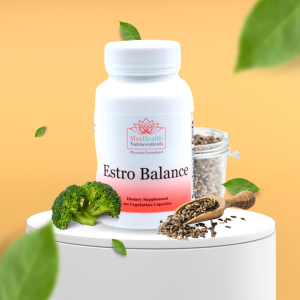
Estro Balance 60s
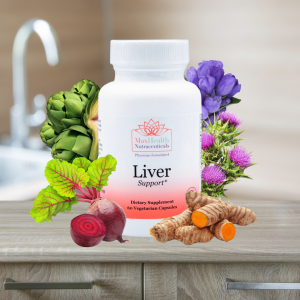
Liver (Detox & Protect) 60s
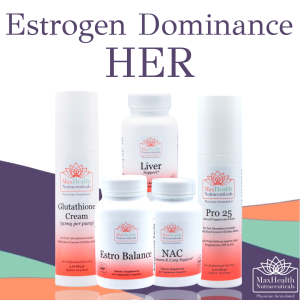
Estrogen Dominance Her Bundle
Disclosure: This post contains affiliate links. If you purchase through these links, we may earn a small commission at no extra cost to you. Learn more.
About the Author
Dr. Nicolle is a double board-certified physician in Family Medicine and Preventive Medicine, with certifications in Functional Medicine and Lifestyle Medicine. She helps busy professionals over 40 optimize their health through root-cause approaches to cardiovascular, hormonal, and metabolic health.
Learn more about Dr. Nicolle →Explore Related Topics
Dive deeper into these connected health areas
Gut Health
Your gut is far more than a digestive organ — it's home to 70% of your immune system, produces key n…
Explore ❤️Metabolic Health
Metabolic health sits at the intersection of blood sugar regulation, cardiovascular function, body c…
Explore 💪Men's Health
Men's health involves a unique interplay of hormonal balance, cardiovascular resilience, metabolic e…
Explore 🧠Mental Health
Mental health is deeply interconnected with hormonal balance, gut health, blood sugar regulation, an…
Explore 📖Skin & Hair Health
Your skin and hair are windows into your internal health. Chronic acne, eczema, psoriasis, and hair …
ExploreReady to Address Your Health Concerns?
Book a Discovery Offer consultation to discuss how our functional medicine approach can help you achieve your health goals.
Book Your Discovery Offer