Omega-3 Fatty Acids: The Complete Heart & Brain Health Guide

- Most people dramatically under-dose omega-3s — aim for 2,000–3,000 mg of actual EPA+DHA daily, not total fish oil
- Triglyceride-form fish oil is ~70% more bioavailable than cheap ethyl ester products
- The Omega-3 Index blood test (target 8–12%) is the best way to know if your levels are adequate
- High-dose EPA reduced cardiovascular events by 25% in the landmark REDUCE-IT trial
A 62-year-old retired engineer walked into my office with triglycerides at 387 and an LDL particle count that made me wince. His cardiologist had put him on a fibrate. His PCP had added a statin. He was taking a grocery-store fish oil capsule — one per day, 300 mg of actual EPA/DHA. He thought he was covered. He wasn't even close.
I see this constantly in practice. Patients who think they're supplementing omega-3s adequately because they take "fish oil" without realizing that the dose, form, and ratio matter enormously. When I optimized his protocol to 3.6 g of EPA/DHA daily using a pharmaceutical-grade triglyceride-form product, his triglycerides dropped to 148 within 10 weeks — without adding another drug.
The omega-3 story is one of the most well-researched chapters in functional medicine, and it touches virtually every organ system. Let me walk you through what the evidence actually shows.
Why Omega-3s Matter: Beyond the Headlines
Omega-3 fatty acids — primarily EPA (eicosapentaenoic acid) and DHA (docosahexaenoic acid) — are essential polyunsaturated fats your body cannot manufacture. They must come from diet or supplementation. The problem? The modern Western diet delivers an omega-6 to omega-3 ratio of roughly 15:1 to 20:1. Our evolutionary diet was closer to 2:1 (1). That imbalance drives chronic inflammation at every level.
The omega-6 to omega-3 ratio is a more clinically useful marker than total omega-3 intake alone. An Omega-3 Index blood test (target: 8–12%) is the gold standard for assessing your actual tissue levels.
Cardiovascular Benefits: What the Trials Show
Triglyceride Reduction
High-dose EPA (2–4 g/day) is the most potent non-pharmaceutical triglyceride-lowering intervention available. The REDUCE-IT trial demonstrated that 4 g of icosapent ethyl (purified EPA) reduced cardiovascular events by 25% in statin-treated patients with elevated triglycerides (2). This wasn't a marginal finding — it was practice-changing.
Anti-Inflammatory Effects on Blood Vessels
Omega-3s reduce vascular inflammation through multiple mechanisms:
- Decrease production of pro-inflammatory eicosanoids (prostaglandins, thromboxanes)
- Increase production of specialized pro-resolving mediators (SPMs) — resolvins and protectins
- Reduce endothelial activation markers (VCAM-1, ICAM-1)
- Lower hs-CRP, a key inflammatory marker for heart disease risk
Blood Pressure
A meta-analysis of 70 randomized trials found that omega-3 supplementation reduced systolic blood pressure by 4.51 mmHg and diastolic by 3.05 mmHg in hypertensive patients — comparable to some antihypertensive medications (3).
Arrhythmia Prevention
DHA in particular has membrane-stabilizing effects on cardiac myocytes, reducing the risk of atrial fibrillation and ventricular arrhythmias. The relationship is dose-dependent and form-dependent, which is why generic fish oil studies often show mixed results (4).
Brain Health: The DHA Story
DHA comprises approximately 40% of the polyunsaturated fatty acids in the brain and 60% in the retina. It's not optional for neurological function — it's structural.
Cognitive Function
- Higher omega-3 intake is associated with slower rates of cognitive decline in longitudinal studies
- The MIDAS trial showed that 900 mg DHA daily improved learning and memory function in adults with age-related cognitive decline (5)
- Low DHA status is associated with reduced brain volume — literally a smaller hippocampus
Mood and Mental Health
EPA appears to be the more potent fatty acid for mood disorders. A meta-analysis of 26 RCTs found that omega-3 supplements with ≥60% EPA significantly reduced depression symptoms, with an effect size comparable to some antidepressants (6). I'll be honest — I recommend high-EPA formulas to nearly every patient with mood concerns before reaching for an SSRI.
The Gut-Brain Connection
Omega-3s modulate the gut microbiome, increasing populations of Bifidobacteria and Lactobacillus — the same genera targeted by probiotic therapy. This creates a bidirectional benefit: better gut health supports better brain health through the vagus nerve pathway.
Dosing: Where Most People Go Wrong
This is where I spend the most time educating patients. A standard fish oil capsule contains 1,000 mg of fish oil, but only 300 mg of actual EPA+DHA. That's the number that matters.
| Goal | EPA+DHA Dose | Ratio Focus |
|---|---|---|
| General health maintenance | 1,000–2,000 mg/day | Balanced EPA:DHA |
| Triglyceride reduction | 2,000–4,000 mg/day | High EPA |
| Depression / mood support | 1,000–2,000 mg EPA | ≥60% EPA |
| Brain health / cognitive | 1,000–2,000 mg DHA | ≥60% DHA |
| Pregnancy / prenatal | 300–600 mg DHA | DHA-dominant |
| Anti-inflammatory | 2,000–3,000 mg/day | Balanced |
If you're on blood thinners (warfarin, Eliquis, Xarelto), doses above 3 g/day require physician monitoring. Omega-3s have mild antiplatelet effects that can potentiate anticoagulants. Always disclose your full supplement regimen to your prescribing physician.
Form Matters: Ethyl Ester vs. Triglyceride vs. Phospholipid
Not all fish oil is created equal. The three main supplemental forms absorb very differently:
- Triglyceride form (rTG): The natural form found in fish. Approximately 70% more bioavailable than ethyl ester forms. This is what I recommend for most patients.
- Ethyl ester (EE): The cheapest form, used in most drugstore fish oils. Requires fat co-ingestion for adequate absorption. The form used in REDUCE-IT (icosapent ethyl) is a purified pharmaceutical version.
- Phospholipid form (krill oil): Highly bioavailable but lower total EPA/DHA per capsule, making therapeutic dosing expensive.
Check the Supplement Facts panel for actual EPA+DHA content per serving — not total "fish oil." A quality triglyceride-form product should deliver at least 500 mg EPA+DHA per softgel. If it takes 10 capsules to hit your target dose, you need a better product.
Food Sources: Can You Get Enough from Diet?
In theory, yes. In practice, it's difficult for most Americans.
| Food | EPA+DHA per 3 oz serving |
|---|---|
| Wild salmon | 1,500–1,800 mg |
| Sardines | 1,100–1,400 mg |
| Mackerel | 1,000–1,300 mg |
| Anchovies | 900–1,100 mg |
| Herring | 1,700–2,000 mg |
| Farmed salmon | 1,200–1,500 mg |
| Cod | 200–300 mg |
| Shrimp | 250–350 mg |
To hit 2,000 mg/day from food alone, you'd need roughly 4–5 servings of fatty fish per week. That's achievable but uncommon. Most of my patients benefit from a combination of 2–3 fatty fish meals per week plus targeted supplementation.
What About Plant-Based Omega-3s?
ALA (alpha-linolenic acid) from flaxseed, chia seeds, and walnuts is an omega-3, but humans convert ALA to EPA at only about 5–10% efficiency, and to DHA at less than 1% (7). Plant-based omega-3s are not a substitute for EPA/DHA. For vegetarians and vegans, algae-derived DHA supplements are the best option.
Testing: The Omega-3 Index
The Omega-3 Index measures the percentage of EPA+DHA in red blood cell membranes, reflecting your tissue levels over the prior 2–3 months.
- < 4%: High risk zone — associated with increased cardiovascular and cognitive risk
- 4–8%: Suboptimal
- 8–12%: Target range — associated with lowest cardiovascular mortality
- > 12%: Rarely seen without supplementation
I run this test on every new patient. It's inexpensive, widely available, and gives us a clear baseline. About 80% of Americans are below 4% — in the high-risk zone — and don't know it.
My Clinical Protocol
Here's the approach I use with patients in my functional medicine practice:
1. Test first: Omega-3 Index at baseline
2. Start supplementation: Triglyceride-form EPA/DHA at 2,000–3,000 mg/day with food
3. Dietary foundation: 2–3 servings of wild-caught fatty fish per week
4. Reduce omega-6 intake: Minimize seed oils (soybean, corn, sunflower, safflower)
5. Retest at 3 months: Adjust dose to achieve Omega-3 Index of 8–12%
6. Maintain: Most patients maintain on 1,500–2,500 mg/day long-term
Frequently Asked Questions
Can omega-3s replace statins for heart health?
How long does it take for omega-3 supplements to work?
Can fish oil cause fish burps?
Are omega-3 supplements safe during pregnancy?
Is krill oil better than fish oil?
The Bottom Line
Omega-3 supplementation is one of the most evidence-backed interventions in all of medicine — but only when done correctly. Most people are under-dosing with low-quality products and never testing their levels. Get your Omega-3 Index checked, invest in a quality triglyceride-form product, eat fatty fish regularly, and work with your physician to dial in the dose that your body actually needs.
References
- Simopoulos AP. The importance of the ratio of omega-6/omega-3 essential fatty acids. Biomed Pharmacother. 2002;56(8):365-379. https://doi.org/10.1016/S0753-3322(02)00253-6
- Bhatt DL, et al. Cardiovascular risk reduction with icosapent ethyl for hypertriglyceridemia (REDUCE-IT). N Engl J Med. 2019;380(1):11-22. https://doi.org/10.1056/NEJMoa1812792
- Miller PE, et al. Long-chain omega-3 fatty acids eicosapentaenoic acid and docosahexaenoic acid and blood pressure: a meta-analysis. Am J Hypertens. 2014;27(7):885-896. https://doi.org/10.1093/ajh/hpu024
- Rix TA, et al. Omega-3 fatty acids and risk of atrial fibrillation. Circ Arrhythm Electrophysiol. 2014;7(3):394-399. https://doi.org/10.1161/CIRCEP.113.001105
- Yurko-Mauro K, et al. Beneficial effects of docosahexaenoic acid on cognition in age-related cognitive decline (MIDAS). Alzheimers Dement. 2010;6(6):456-464. https://doi.org/10.1016/j.jalz.2010.01.013
- Liao Y, et al. Efficacy of omega-3 PUFAs in depression: a meta-analysis. Transl Psychiatry. 2019;9(1):190. https://doi.org/10.1038/s41398-019-0515-5
- Burdge GC, Calder PC. Conversion of alpha-linolenic acid to EPA and DHA in humans. Curr Opin Clin Nutr Metab Care. 2005;8(2):161-166. https://doi.org/10.1097/00075197-200503000-00015
Supplements for Heart Health
Clinical-grade picks for this topic
Affiliate disclosure: The product links below are affiliate links — we may earn a commission at no extra cost to you. Recommendations are based on clinical use, not commissions. Learn more.
Frequently Asked Questions
Common questions about omega-3 fatty acids: the complete heart & brain health guide
Recommended Supplements
Professional-grade supplements from my MaxHealth Nutraceuticals line — the same formulas I use in clinical practice.

RESPeRATE Deluxe Duo

Inner Balance™ Coherence Plus

Omega Ultra TG
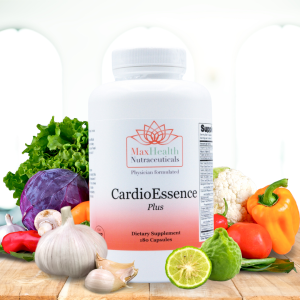
CardioEssence Plus
CoQ10

Ubiquinol 100mg 60s
Heart Support 60s

Nitric Supreme Cardiovascular Support
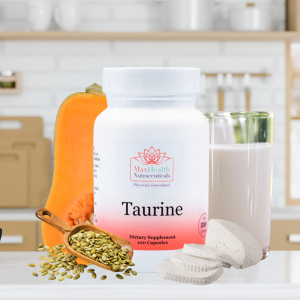
Taurine 500mg 100s
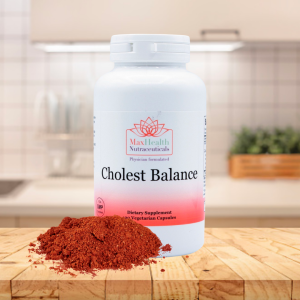
Cholest Balance 120s

Vitamin D3 5000 IU + K2 CAPSULES 100s

Multi Mag
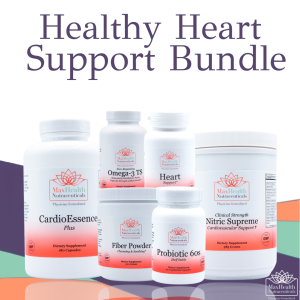
Healthy Heart Bundle
Disclosure: This post contains affiliate links. If you purchase through these links, we may earn a small commission at no extra cost to you. Learn more.
About the Author
Dr. Nicolle is a double board-certified physician in Family Medicine and Preventive Medicine, with certifications in Functional Medicine and Lifestyle Medicine. She helps busy professionals over 40 optimize their health through root-cause approaches to cardiovascular, hormonal, and metabolic health.
Learn more about Dr. Nicolle →Explore Related Topics
Dive deeper into these connected health areas
Gut Health
Your gut is far more than a digestive organ — it's home to 70% of your immune system, produces key n…
Explore 🌸Women's Health
Women's health encompasses a complex interplay of hormonal cycles, reproductive biology, and unique …
Explore 💪Men's Health
Men's health involves a unique interplay of hormonal balance, cardiovascular resilience, metabolic e…
Explore 🧠Mental Health
Mental health is deeply interconnected with hormonal balance, gut health, blood sugar regulation, an…
Explore 📖Skin & Hair Health
Your skin and hair are windows into your internal health. Chronic acne, eczema, psoriasis, and hair …
ExploreReady to Address Your Health Concerns?
Book a Discovery Offer consultation to discuss how our functional medicine approach can help you achieve your health goals.
Book Your Discovery Offer