Scalp Health: The Foundation of Hair Longevity After 40

- After 40, durable hair longevity is a scalp problem first — driven by declining microvascular perfusion, oxidized sebum, and chronic low-grade follicular inflammation
- Most thinning in adults over 40 is treatable when the systemic foundation (ferritin >70, vitamin D >40, fasting insulin <8, optimized thyroid and sex hormones) is addressed before topical interventions
- The evidence-based topical and device stack is gentle rhythmic cleansing, daily scalp massage, photobiomodulation (LLLT) 4-6x/week, and a single anchor pharmacologic agent — not five competing serums
- Hair cycles slowly: every meaningful intervention needs a 16-26 week trial with standardized monthly part-line photos before judging response
The patient who finally convinced me to write this was 51, a tenured college professor, and unraveling quietly under a hat she'd started wearing to meetings. Her dermatologist had handed her a minoxidil prescription and a copay receipt. Her primary care doctor had ordered a TSH, called it normal, and shrugged. Nobody had looked at her scalp. Not really. When I parted her hair under good light, the story was right there: diffuse miniaturization at the crown, low-grade erythema along the part line, visible flaking at the temples, and a scalp that felt warm and slightly tender to gentle pressure. Her hair wasn't the problem. Her scalp was — and the scalp had been telling on her metabolism, her hormones, and her stress physiology for at least two years.
After 40, hair longevity is a scalp problem first and a follicle problem second. The follicle is downstream. The scalp — its circulation, its sebum chemistry, its inflammatory tone, its microbiome, and the systemic signals reaching it — determines whether each follicle has another twenty productive cycles in it, or whether it quietly miniaturizes into irrelevance over the next decade. This is the framework I wish more clinicians used.
Why Scalp Health Is a Longevity Question
The hair follicle is one of the most metabolically demanding structures in the body. A single anagen-phase follicle divides faster than almost any cell line outside of bone marrow, and it does so for years at a time. That metabolic intensity makes it exquisitely sensitive to oxygen delivery, micronutrient status, hormonal signaling, and inflammatory load — and the scalp is the delivery system for all of it.
Three things change in scalp tissue after 40 that quietly drive hair loss:
- Microvascular density declines. Capillary perfusion to the follicular dermal papilla decreases with age and accelerates under cardiovascular risk factors — insulin resistance, hypertension, smoking, and a sedentary lifestyle. Less blood, less nutrient delivery, smaller follicles.
- Sebum chemistry shifts. Sebum becomes more oxidized and more inflammatory after 40, particularly in perimenopause and andropause. Oxidized squalene irritates the follicular opening and feeds dysbiotic *Malassezia* growth.
- Low-grade scalp inflammation becomes chronic. Subclinical folliculitis, seborrheic patches, and trichodynia (scalp tenderness) all reflect a scalp immune system that's no longer regulating well — and chronic perifollicular inflammation is one of the strongest histologic predictors of progression to scarring or miniaturizing alopecia.
The good news is that all three are modifiable. The bad news is that none of them are addressed by the thickening shampoo aisle.
The Systemic Drivers Behind a "Scalp" Problem
Before any topical or laser intervention is worth doing, the systemic foundation has to be addressed. In my practice, the conditions most likely to be quietly destroying scalp health in patients over 40 are:
- Iron and ferritin deficiency — Ferritin under 50 ng/mL is associated with telogen effluvium and slowed regrowth, even in the absence of anemia. Women with heavy periods, vegetarians, and frequent blood donors are at highest risk.
- Subclinical thyroid dysfunction — A "normal" TSH can hide a low free T3, elevated reverse T3, or autoimmune thyroiditis. All three impair the anagen phase. See our thyroid health guide and the hair loss root causes overview.
- Hormonal shifts — In women, declining estrogen and a relative rise in androgen sensitivity drives the perimenopausal thinning pattern. In men, the issue is rarely "too much testosterone" — it's elevated DHT activity at the follicle.
- Insulin resistance — Hyperinsulinemia upregulates androgen receptor activity and impairs microvascular function. Patients with metabolic syndrome have measurably thinner scalp hair and slower regrowth.
- Chronic stress and cortisol dysregulation — Sustained sympathetic dominance constricts scalp capillaries and accelerates telogen entry. Most patients can date a thinning episode to a stress event 3-4 months prior.
- Nutrient gaps beyond iron — Zinc, selenium, vitamin D, biotin, B12, and adequate protein (1.2-1.6 g/kg/day for adults over 40) are the workhorse nutrients of follicular biology.
If a patient's ferritin is under 70 ng/mL, their vitamin D is under 40 ng/mL, or their fasting insulin is over 8, the scalp will not respond reliably to topical interventions until those numbers move. Treat the soil first.
A Clinician's Scalp Self-Exam
Once a month, in good light, part the hair in three places — the crown, the mid-part, and one temple. Look for:
- Visible scalp through the part that wasn't there a year ago, especially widening at the crown or temples
- Erythema (pinkness) along the part line or around individual follicles
- Flaking — fine, white, sticky flakes suggest seborrheic dermatitis; large, dry flakes suggest a barrier problem
- Greasy or tender scalp within 24 hours of washing, especially with itch — a sebum oxidation or microbiome signal
- Miniaturized hairs (short, fine, depigmented hairs mixed in with normal terminal hairs) — an early sign of androgenetic patterning
- Hair shedding of more than ~100-150 hairs per day for more than 8 weeks
Any two of these in combination warrants a formal evaluation rather than a louder shampoo.
The Scalp Longevity Stack
Once the systemic foundation is in place, the topical and device-based scalp stack is what actually moves the needle.
1. Daily Mechanical and Chemical Care
- Wash frequency matched to sebum production — Most adults over 40 do best washing every 2-3 days with a gentle, sulfate-free cleanser. Both over-washing (barrier disruption) and under-washing (sebum oxidation and dysbiosis) damage scalp health.
- Targeted active shampoos 1-2x/week — Zinc pyrithione, ketoconazole 1%, or salicylic acid for patients with seborrheic patterns. Rotated, not daily, to preserve the microbiome.
- A boar-bristle or scalp-massage brush — 3-5 minutes of scalp massage daily increases perfusion and has small but real RCT evidence for hair density gains over 24 weeks.
2. Photobiomodulation (Red Light / LLLT)
Low-level laser therapy and red light at 630-680 nm is one of the few non-pharmacologic interventions with consistent RCT evidence for androgenetic alopecia in both men and women. It increases mitochondrial activity in dermal papilla cells, prolongs anagen, and modestly increases hair density and shaft thickness over 16-26 weeks of consistent use. The protocol I program for most patients is 4-6 sessions per week of 15-25 minutes with a fitted device. Devices like the Theradome PRO LH80 Laser Helmet make adherence realistic because hands stay free.
3. Topical Anti-Androgens and Growth Stimulators
- Minoxidil 5% (topical or low-dose oral) — The most evidence-backed pharmacologic option. Onset of visible benefit is 4-6 months. Shedding for 4-6 weeks at initiation is expected.
- Compounded topicals — Topical finasteride, ketoconazole 2%, and caffeine are reasonable add-ons in clinically appropriate patients.
- Rosemary oil 2% in a carrier — In one head-to-head RCT, rosemary oil performed comparably to 2% minoxidil at six months for androgenetic alopecia. Cheap, low-risk, slow.
4. Scalp Microbiome Support
The follicular microbiome influences inflammation, sebum oxidation, and barrier function. For a deeper dive, see the scalp microbiome guide. Practical anchors: rotate gentle cleansers, avoid daily heavy oils that smother follicles, and treat persistent seborrhea with an antifungal cycle rather than indefinitely.
5. Environmental Load
Particulate air pollution and indoor VOCs are an underappreciated driver of scalp oxidative stress. A bedroom-grade HEPA unit like the Austin Air HealthMate Plus® reduces particulate exposure during the longest stationary window of the day. The connection to broader environmental medicine is covered in our non-toxic home guide.
The 6-Month Scalp Longevity Protocol
This is the structured protocol I most often program for a new patient over 40 with early diffuse thinning.
| Phase | Weeks | Focus | Anchor Interventions |
|---|---|---|---|
| Foundation | 0-4 | Labs, baseline photos, scalp exam | Comprehensive panel (CBC, ferritin, iron studies, full thyroid, fasting insulin, vitamin D, sex hormones, DHT) |
| Repletion | 0-12 | Correct nutrient gaps | Iron if ferritin <70; Vitamin D3 5000 IU + K2; zinc; high-EPA omega-3; protein to 1.2-1.6 g/kg |
| Topical & Device | 4-26 | Daily scalp stack | Gentle cleansing rhythm; minoxidil if indicated; LLLT 4-6x/week; daily scalp massage |
| Systemic | 0-24 | Hormones, insulin, stress | Hormone optimization where indicated; insulin sensitization; sleep and HPA work |
| Reassessment | 24-26 | Repeat photos & labs | Density tracking; ferritin/vit D recheck; protocol refinement |
Inline Supplement & Equipment Stack
The MaxHealth Nutraceuticals stack I most commonly pair with this protocol:
- Theradome PRO LH80 Laser Helmet — clinical-grade LLLT for hands-free adherence
- Red Light Face Mask — adjunct for hairline and temple regions
- Austin Air HealthMate Plus® — reduces overnight particulate and VOC load on scalp
- Ferrochel Plus (25mg) — gentle, well-absorbed iron for ferritin repletion when indicated
- Zinc Complex Plus Copper — supports follicular keratinization without inducing copper deficiency
- Vitamin D3 5000 IU + K2 — restores vitamin D status and supports vascular calcium handling
- B Coenzyme Methyl Complex — methylated B-vitamins for follicular metabolism
- Omega Ultra TG — high-EPA omega-3 to lower scalp inflammatory tone
- Biotin 10,000 and Skin Hair Nails Formula — supportive micronutrient base
- Beef Collagen Vanilla — protein and amino-acid support for shaft quality
- Selenium 200mcg — thyroid and antioxidant support
- Beauty Bundle — bundled hair, skin, and nail support for patients who prefer a single SKU
What Most Patients Get Wrong
- Treating symptoms instead of soil. Thickening shampoos, biotin gummies, and serums do nothing if ferritin is 22 and fasting insulin is 14.
- Quitting at week 8. Hair cycles slowly. Every meaningful scalp intervention requires a minimum 16-26 week trial before judging response.
- Stacking too many topicals. Three topicals is usually two too many. Pick one anchor (minoxidil or rosemary), one anti-inflammatory cleanser, and one device.
- Ignoring stress. Telogen effluvium triggered by stress lags the event by 3-4 months and recovers slowly. Cortisol matters. See our stress management protocol.
- Skipping photos. Standardized monthly part-line photos in the same light are the single most useful objective tracking tool. Memory is unreliable here.
A Realistic Closing
No protocol restores a follicle that has fully scarred. But the vast majority of thinning I see in patients over 40 is not scarring — it is miniaturization driven by treatable systemic and scalp-level dysfunction. Caught early, treated comprehensively, and tracked patiently, most patients see meaningful density and shaft-quality gains within 6-9 months. Caught late, after a decade of "it's just genetics," the ceiling is much lower.
If you'd like a personalized scalp longevity workup that includes ferritin, full thyroid, hormones, and insulin — plus a written protocol matched to your scalp exam — take our Wellness Quiz to map your starting point, or book a Discovery Offer to review your case with me directly.
---
References
- Trüeb, R.M. (2015). The impact of oxidative stress on hair. International Journal of Cosmetic Science, 37(Suppl 2), 25-30. https://doi.org/10.1111/ics.12286
- Goldberg, L.J., & Lenzy, Y. (2010). Nutrition and hair. Clinics in Dermatology, 28(4), 412-419. https://doi.org/10.1016/j.clindermatol.2010.03.038
- Avci, P., et al. (2014). Low-level laser (light) therapy (LLLT) for treatment of hair loss. Lasers in Surgery and Medicine, 46(2), 144-151. https://doi.org/10.1002/lsm.22170
- Panahi, Y., et al. (2015). Rosemary oil vs minoxidil 2% for the treatment of androgenetic alopecia: A randomized comparative trial. Skinmed, 13(1), 15-21.
- Koyama, T., et al. (2016). Standardized scalp massage results in increased hair thickness by inducing stretching forces to dermal papilla cells. Eplasty, 16, e8.
- Suchonwanit, P., Thammarucha, S., & Leerunyakul, K. (2019). Minoxidil and its use in hair disorders: A review. Drug Design, Development and Therapy, 13, 2777-2786. https://doi.org/10.2147/DDDT.S214907
Supplements for Functional Wellness
Clinical-grade picks for this topic
Affiliate disclosure: The product links below are affiliate links — we may earn a commission at no extra cost to you. Recommendations are based on clinical use, not commissions. Learn more.
Frequently Asked Questions
Common questions about scalp health: the foundation of hair longevity after 40
Recommended Supplements
Professional-grade supplements from my MaxHealth Nutraceuticals line — the same formulas I use in clinical practice.

Theradome PRO LH80 Laser Helmet

Red Light Face Mask

Austin Air HealthMate Plus®
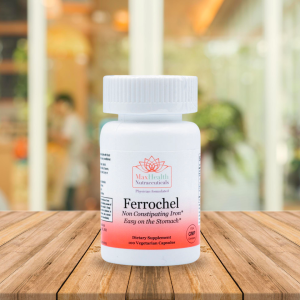
Ferrochel Plus (25mg) 100s
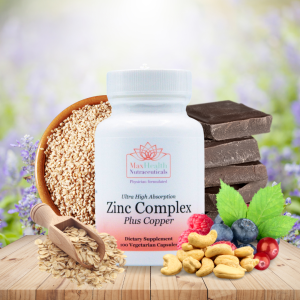
Zinc Complex Plus Copper

Vitamin D3 5000 IU + K2 CAPSULES 100s
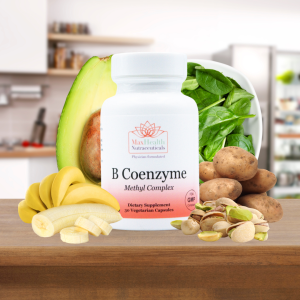
B Coenzyme Methyl Complex
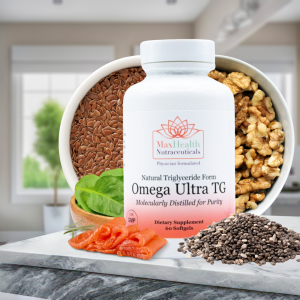
Omega Ultra TG
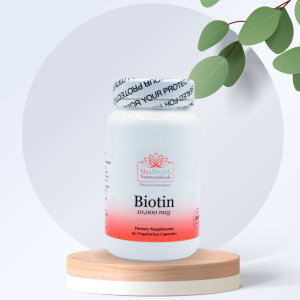
Biotin 10,000 90s
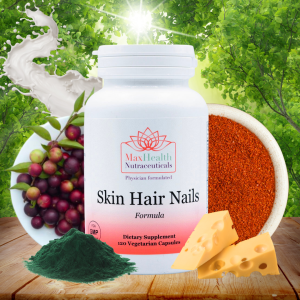
Skin Hair Nails Formula 120s
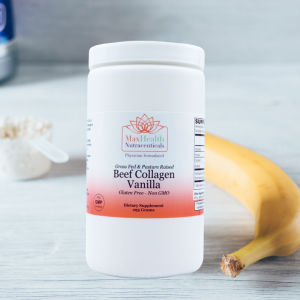
Beef Collagen Vanilla
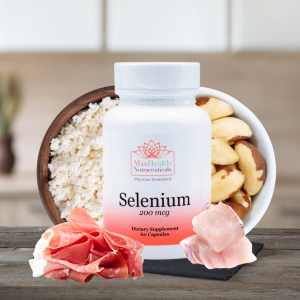
Selenium 200mcg 60s

Beauty Bundle
Disclosure: This post contains affiliate links. If you purchase through these links, we may earn a small commission at no extra cost to you. Learn more.
About the Author
Dr. Nicolle is a double board-certified physician in Family Medicine and Preventive Medicine, with certifications in Functional Medicine and Lifestyle Medicine. She helps busy professionals over 40 optimize their health through root-cause approaches to cardiovascular, hormonal, and metabolic health.
Learn more about Dr. Nicolle →Explore Related Topics
Dive deeper into these connected health areas
Hormone Health
Hormones are the chemical messengers that regulate virtually every process in your body — from metab…
Explore 🦠Gut Health
Your gut is far more than a digestive organ — it's home to 70% of your immune system, produces key n…
Explore ❤️Metabolic Health
Metabolic health sits at the intersection of blood sugar regulation, cardiovascular function, body c…
Explore 🌸Women's Health
Women's health encompasses a complex interplay of hormonal cycles, reproductive biology, and unique …
Explore 💪Men's Health
Men's health involves a unique interplay of hormonal balance, cardiovascular resilience, metabolic e…
Explore 🧠Mental Health
Mental health is deeply interconnected with hormonal balance, gut health, blood sugar regulation, an…
Explore 📖Skin & Hair Health
Your skin and hair are windows into your internal health. Chronic acne, eczema, psoriasis, and hair …
ExploreReady to Address Your Health Concerns?
Book a Discovery Offer consultation to discuss how our functional medicine approach can help you achieve your health goals.
Book Your Discovery Offer