Is Your Thyroid the Missing Piece? A Complete Guide to Thyroid Health

- 20 million Americans have thyroid disease — up to 60% are undiagnosed
- TSH alone misses most dysfunction; a full panel includes Free T3, Reverse T3, and antibodies
- Hashimoto's autoimmunity causes 90% of hypothyroidism and requires immune-focused treatment
- Many patients feel terrible on levothyroxine alone due to impaired T4-to-T3 conversion
Your thyroid is a 20-gram gland shaped like a butterfly, and it quietly controls almost everything: your energy, your weight, your mood, your digestion, even your cholesterol. When it's working, you never think about it. When it's not, you feel it everywhere, and yet doctor after doctor tells you your labs look "fine."
An estimated 20 million Americans have thyroid disease. Up to 60% of them don't know it (1). The gap between what conventional medicine calls "normal" and what actually feels normal leaves millions of people stuck on a treadmill of fatigue, weight gain, and brain fog with no answers.
The Thyroid's Far-Reaching Impact
Your thyroid produces hormones (primarily T4 and T3) that regulate:
- Metabolism and weight regulation — every cell has thyroid receptors
- Energy production at the mitochondrial level
- Heart rate and cardiovascular function
- Body temperature regulation
- Mood, anxiety, and cognitive function
- Digestive motility and nutrient absorption
- Hair, skin, and nail health
- Menstrual regularity and fertility — critical in PCOS and perimenopause
- Cholesterol metabolism — hypothyroidism is a hidden cause of high cholesterol
- Bone density and muscle function
Signs of Thyroid Dysfunction
Hypothyroidism (Underactive) — The "Slow Down" Pattern
- Fatigue, especially in the morning despite adequate sleep
- Weight gain or stubborn inability to lose weight
- Cold intolerance — always needing a sweater
- Constipation and sluggish digestion
- Dry skin, brittle nails, and hair loss (especially the outer third of eyebrows)
- Brain fog, poor memory, and depression
- Heavy or irregular periods
- Elevated cholesterol despite a healthy diet
- Fluid retention and puffy face
- Muscle aches, joint stiffness
Hyperthyroidism (Overactive) — The "Speed Up" Pattern
- Anxiety, irritability, and tremors
- Weight loss despite good appetite
- Heat intolerance and excessive sweating
- Rapid or irregular heartbeat (palpitations)
- Insomnia and restlessness
- Loose stools and increased bowel frequency
- Light or absent periods
- Eye changes (in Graves' disease)
Hashimoto's Thyroiditis — The Autoimmune Swing
Hashimoto's, the most common cause of hypothyroidism in developed countries, can produce alternating hypo and hyper symptoms as the immune system attacks the gland, causing intermittent hormone release. This "thyroid swing" is frequently misdiagnosed as anxiety, depression, or perimenopause (2).
Why Standard Testing Falls Short
Most doctors check only TSH — and sometimes add Free T4. This approach misses the majority of thyroid dysfunction.
| Marker | What It Tells You | Conventional Range | Optimal Functional Range |
|---|---|---|---|
| TSH | Pituitary signal to thyroid | 0.45-4.5 mIU/L | 1.0-2.0 mIU/L |
| Free T4 | Inactive hormone (storage form) | 0.8-1.8 ng/dL | 1.1-1.5 ng/dL |
| Free T3 | Active hormone (rarely checked!) | 2.0-4.4 pg/mL | 3.0-4.0 pg/mL |
| Reverse T3 | Metabolic brake (blocks T3) | 9.2-24.1 ng/dL | < 15 ng/dL; RT3 ratio > 20 |
| TPO Antibodies | Hashimoto's autoimmunity | < 35 IU/mL | < 2 IU/mL (truly negative) |
| Thyroglobulin Ab | Additional autoimmune marker | < 1 IU/mL | < 1 IU/mL |
The critical gap: A patient can have a "normal" TSH of 3.5, yet their Free T3 is at the bottom of the range and their Reverse T3 is elevated. That means their cells are effectively hypothyroid despite "normal" screening. This is called cellular hypothyroidism and is extremely common (3).
A "normal" TSH does not guarantee normal thyroid function. You can have cellular hypothyroidism (low Free T3) that leaves you exhausted and overweight despite a perfect TSH.
The T4-to-T3 Conversion Problem
Your thyroid primarily produces T4, which is biologically inactive. It must be converted to T3 (the active form) in the liver, gut, and peripheral tissues. Many patients have adequate T4 production but impaired conversion — a problem invisible on standard testing.
Factors that impair T4-to-T3 conversion:
Chronic stress and elevated cortisol divert T4 toward Reverse T3 instead of active T3. Gut dysfunction matters here too, since roughly 20% of T4-to-T3 conversion happens in the gut. Nutrient deficiencies in selenium, zinc, iron, and iodine remove essential cofactors from the equation. Inflammation from any source (diet, infection, autoimmunity) slows conversion, as does extreme caloric restriction and liver dysfunction. Certain medications also interfere, including beta-blockers, birth control pills, lithium, and amiodarone.
Hashimoto's: The Autoimmune Root
Up to 90% of hypothyroidism in the US is caused by Hashimoto's thyroiditis — yet most patients are never tested for antibodies (2). This matters because:
- Hashimoto's is an immune problem, not just a thyroid problem
- Antibody levels fluctuate and can be reduced through targeted interventions
- The autoimmune process often begins years before TSH becomes abnormal
- Treating the autoimmunity can slow or halt thyroid destruction
- Other autoimmune conditions may co-exist and need screening
Triggers That Activate Hashimoto's
- Gut permeability ("leaky gut"): molecular mimicry between gut proteins and thyroid tissue
- Gluten: gliadin's molecular structure resembles thyroid tissue (cross-reactivity)
- Viral infections: Epstein-Barr virus is strongly associated
- Environmental toxins: heavy metals, pesticides, fluoride, bromide
- Nutrient deficiencies: selenium, vitamin D, and zinc deficiency increase risk
- Chronic stress: immune dysregulation from HPA axis dysfunction
Our Functional Medicine Approach to Thyroid Optimization
Step 1: Comprehensive Assessment
- Full thyroid panel (all 6 markers in the table above)
- Nutrient cofactor testing: selenium, zinc, iron/ferritin, vitamin D, iodine
- Gut health evaluation — stool testing, food sensitivity assessment
- Adrenal/cortisol assessment — DUTCH or 4-point salivary cortisol
- Inflammatory markers: hs-CRP, homocysteine, ESR
- Environmental toxin screening when indicated
Step 2: Address Root Causes
- Heal gut dysfunction — restore intestinal barrier, eliminate triggers, rebuild microbiome
- Correct nutrient deficiencies — selenium (200mcg/day has been shown to reduce TPO antibodies by 21% in clinical trials) (4)
- Reduce toxic burden — filtered water, clean personal care products, air purification
- Optimize blood sugar — insulin resistance impairs thyroid hormone sensitivity
- Manage stress and cortisol — cortisol excess drives T4 to Reverse T3
Step 3: Dietary Optimization
- Anti-inflammatory foundation — emphasize omega-3s, colorful vegetables, and quality protein. Our meal plans support this approach.
- Consider gluten elimination — particularly for Hashimoto's patients (the gluten-thyroid connection is well-documented) (5)
- Brazil nuts — 2-3 daily provide ~200mcg selenium naturally
- Sea vegetables — natural iodine source (use cautiously with Hashimoto's)
- Cruciferous vegetables — safe when cooked; raw goitrogens are only problematic in iodine-deficient individuals
Step 4: Optimize Medication (If Needed)
When medication is appropriate, we consider all options, not just levothyroxine:
- Levothyroxine (T4 only) — standard treatment, works for many but not all
- Combination T4/T3 therapy — for patients with conversion issues
- Natural desiccated thyroid (NDT) — contains T4, T3, T2, T1, and calcitonin
- Compounded formulations — custom T4/T3 ratios for individual optimization
- A 2013 study in *J Clin Endocrinol Metab* found that 49% of hypothyroid patients preferred combination therapy over T4 alone (6)
The Thyroid-Hormone Connection
Thyroid dysfunction doesn't exist in isolation. It's deeply interconnected with:
- Adrenal health: treating the thyroid without addressing adrenals often fails
- Sex hormones: estrogen dominance increases thyroid-binding globulin, reducing free hormones
- Testosterone: hypothyroidism lowers testosterone in men
- Blood sugar regulation: insulin resistance impairs thyroid function at every level
- Gut health: the "gut-thyroid axis" is increasingly recognized in research (7)
- Postpartum health: up to 10% of new mothers develop postpartum thyroiditis, often mistaken for "normal" postpartum fatigue
Reclaim Your Energy
If any of this resonated, your thyroid deserves a second look, this time with the right tests and the right reference ranges. Schedule a Discovery Offer to get a full thyroid evaluation, or take our Wellness Quiz to see how your symptoms connect.
References
- American Thyroid Association. General Information/Press Room. Thyroid Disease Facts. https://www.thyroid.org/media-main/press-room/
- Caturegli P, De Remigis A, Rose NR. Hashimoto thyroiditis: clinical and diagnostic criteria. Autoimmun Rev. 2014;13(4-5):391-397. https://doi.org/10.1016/j.autrev.2014.01.007
- Bianco AC, et al. Paradigms of dynamic control of thyroid hormone signaling. Endocr Rev. 2019;40(3):723-746. https://doi.org/10.1210/er.2018-00275
- Toulis KA, et al. Selenium supplementation in the treatment of Hashimoto's thyroiditis. Thyroid. 2010;20(10):1163-1173. https://doi.org/10.1089/thy.2009.0351
- Vojdani A, et al. The prevalence of antibodies against wheat and milk proteins in blood donors and their contribution to neuroimmune reactivities. Nutrients. 2014;6(1):15-36. https://doi.org/10.3390/nu6010015
- Hoang TD, et al. Desiccated thyroid extract compared with levothyroxine in the treatment of hypothyroidism. J Clin Endocrinol Metab. 2013;98(5):1982-1990. https://doi.org/10.1210/jc.2012-3107
- Knezevic J, et al. Thyroid-gut-axis: how does the microbiota influence thyroid function? Nutrients. 2020;12(6):1769. https://doi.org/10.3390/nu12061769
- Garber JR, et al. Clinical practice guidelines for hypothyroidism in adults. Thyroid. 2012;22(12):1200-1235. https://doi.org/10.1089/thy.2012.0205
- Duntas LH. The role of iodine and selenium in autoimmune thyroiditis. Horm Metab Res. 2015;47(10):721-726. https://doi.org/10.1055/s-0035-1559631
- Wiersinga WM. Clinical relevance of environmental factors in the pathogenesis of autoimmune thyroid disease. Endocrinol Metab. 2016;31(2):213-222. https://doi.org/10.3803/EnM.2016.31.2.213
Supplements for Hormone Optimization
Clinical-grade picks for this topic

Theradome PRO LH80 Laser Helmet
$895.00

Austin Air HealthMate Plus®
$895.00
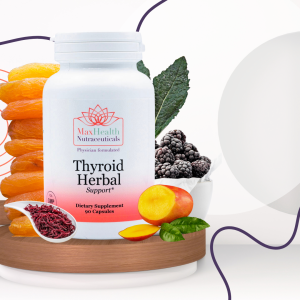
Thyroid Herbal Support 90s
$62.00
Affiliate disclosure: The product links below are affiliate links — we may earn a commission at no extra cost to you. Recommendations are based on clinical use, not commissions. Learn more.
Frequently Asked Questions
Common questions about is your thyroid the missing piece? a complete guide to thyroid health
Recommended Supplements
Professional-grade supplements from my MaxHealth Nutraceuticals line — the same formulas I use in clinical practice.
Theradome PRO LH80 Laser Helmet
Austin Air HealthMate Plus®
Thyroid Herbal Support 90s
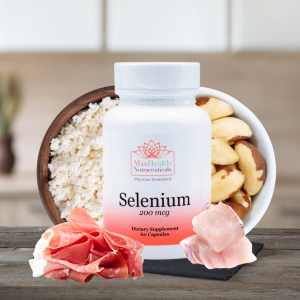
Selenium 200mcg 60s
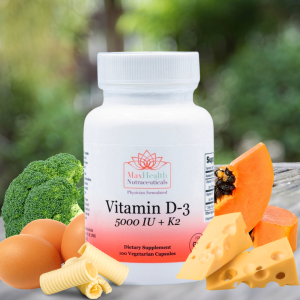
Vitamin D3 5000 IU + K2 CAPSULES 100s
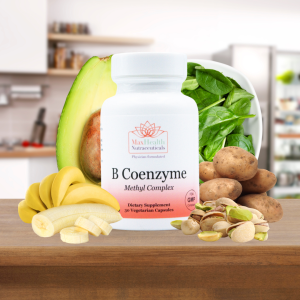
B Coenzyme Methyl Complex
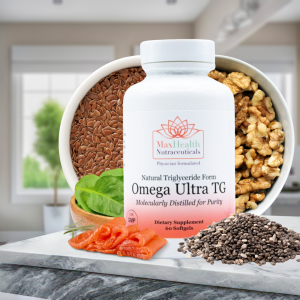
Omega Ultra TG
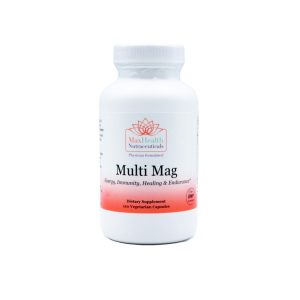
Multi Mag
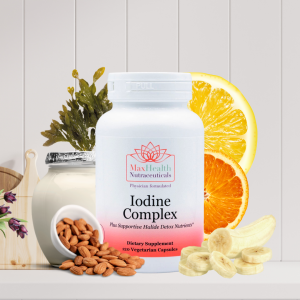
Iodine Complex 120s
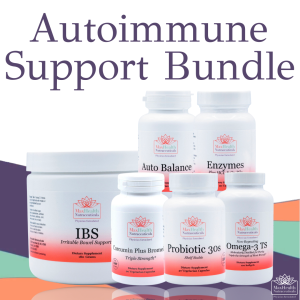
Autoimmune Support Bundle
Disclosure: This post contains affiliate links. If you purchase through these links, we may earn a small commission at no extra cost to you. Learn more.
About the Author
Dr. Nicolle is a double board-certified physician in Family Medicine and Preventive Medicine, with certifications in Functional Medicine and Lifestyle Medicine. She helps busy professionals over 40 optimize their health through root-cause approaches to cardiovascular, hormonal, and metabolic health.
Learn more about Dr. Nicolle →Explore Related Topics
Dive deeper into these connected health areas
Gut Health
Your gut is far more than a digestive organ — it's home to 70% of your immune system, produces key n…
Explore ❤️Metabolic Health
Metabolic health sits at the intersection of blood sugar regulation, cardiovascular function, body c…
Explore 💪Men's Health
Men's health involves a unique interplay of hormonal balance, cardiovascular resilience, metabolic e…
Explore 🧠Mental Health
Mental health is deeply interconnected with hormonal balance, gut health, blood sugar regulation, an…
Explore 📖Skin & Hair Health
Your skin and hair are windows into your internal health. Chronic acne, eczema, psoriasis, and hair …
ExploreReady to Address Your Health Concerns?
Book a Discovery Offer consultation to discuss how our functional medicine approach can help you achieve your health goals.
Book Your Discovery Offer