When to Test Your Hormones: Complete Timing Guide

- Hormone testing at the wrong time, with the wrong tests, or interpreted with overly broad reference ranges misses dysfunction until it's severe.
- Progesterone MUST be tested mid-luteal (Day 19–22, ~7 days post-ovulation) — testing on any other day is clinically meaningless.
- Testosterone should be tested before 10 AM fasting — it peaks in early morning and declines throughout the day.
- TSH alone is insufficient for thyroid assessment — free T3, free T4, reverse T3, and antibodies are essential.
- Functional optimal ranges are significantly narrower than standard lab ranges (e.g., TSH 1.0–2.0 vs. lab 'normal' of 0.5–4.5).
I can't tell you how many times a patient has sat down and said, "My doctor checked my hormones and everything's normal." Then I look at the labs and all I see is a TSH. That's it. One number. Checked at 3 PM on a random Tuesday. For a woman with irregular cycles, no cycle-day timing was considered. For a man complaining of fatigue and low libido, testosterone wasn't even ordered.
This drives me a little crazy, if I'm being honest. Because the difference between useful hormone testing and useless hormone testing often comes down to *when* the blood was drawn, *which* tests were ordered, and *how* the results are interpreted. Get any of those wrong, and you'll be falsely reassured that "everything's fine" when it isn't.
Hormone testing is one of the most powerful diagnostic tools in functional medicine — but only when done correctly. Timing, cycle day, time of day, and test type all dramatically affect the clinical utility of results. This guide gives you the practical knowledge to ensure your hormone testing is accurate and actionable.
Menstrual Cycle-Dependent Hormones (Women)
When to Test Estrogen and Progesterone
For menstruating women, hormones fluctuate dramatically across the cycle. Testing on the wrong day gives misleading results:
Day 3 (Follicular Phase):
- FSH (Follicle Stimulating Hormone): Assesses ovarian reserve
- LH (Luteinizing Hormone): Evaluates pituitary function
- Estradiol (E2): Baseline estrogen level
- Purpose: Evaluates ovarian function and fertility potential
Day 19–22 (Mid-Luteal Phase, ~7 days post-ovulation):
- Progesterone: MUST be tested mid-luteal to confirm ovulation and assess progesterone adequacy
- Estradiol: Evaluates luteal estrogen for hormonal balance
- Purpose: Confirms ovulation, assesses progesterone sufficiency, identifies luteal phase defect
Testing progesterone on Day 3 or Day 14 is clinically meaningless. Progesterone only rises significantly after ovulation, peaking 7 days later. If your doctor tested progesterone on a random day and said it was "normal" at 0.5 ng/mL, they tested at the wrong time. Mid-luteal progesterone should be above 10 ng/mL (ideally 15–25 ng/mL).
| Hormone | Best Day to Test | Optimal Range | Notes |
|---|---|---|---|
| FSH | Day 3 | 3–8 mIU/mL | Elevated = declining ovarian reserve |
| LH | Day 3 | 2–6 mIU/mL | High LH:FSH ratio suggests PCOS |
| Estradiol | Day 3 or Day 19–22 | Day 3: 25–75 pg/mL | Context-dependent interpretation |
| Progesterone | Day 19–22 (7 DPO) | > 10 ng/mL (ideal 15–25) | MUST be mid-luteal for accuracy |
| AMH | Any day | 1.0–3.5 ng/mL | Ovarian reserve (not cycle-dependent) |
| DHEA-S | Any day (morning) | Age-dependent | Adrenal androgen marker |
For Irregular Cycles or PCOS
If cycles are irregular, standard cycle-day timing doesn't work. Options:
- Test on Day 3 if you can identify a clear menstrual onset
- Use the DUTCH test (dried urine) which captures hormone metabolites over 24 hours
- Track basal body temperature and ovulation predictor kits to identify ovulation, then test 7 days later
For Perimenopausal Women
Hormones fluctuate wildly in perimenopause, making single-point blood draws unreliable:
- The DUTCH test provides a more complete picture through metabolite mapping
- Test multiple months to identify patterns
- Clinical symptoms often outweigh lab numbers in perimenopause
Testosterone (Men and Women)
Men
- Time: Before 10 AM (fasting) — testosterone peaks in early morning and declines throughout the day
- Tests: Total testosterone, free testosterone, SHBG, estradiol, LH, FSH
- Frequency: Confirm with two separate morning draws if low
- Optimal ranges: Total T 600–900 ng/dL; free T 15–25 pg/mL (functional ranges, not lab "normal")
Women
- Time: Morning, Day 3 of cycle (or any morning if post-menopausal)
- Tests: Total and free testosterone, DHEA-S
- Elevated testosterone: Suggests PCOS, adrenal hyperplasia, or insulin resistance
- Low testosterone: Contributes to fatigue, low libido, muscle loss
Thyroid Panel
Thyroid testing is one of the most commonly mismanaged areas in conventional medicine:
- When: Morning, fasting (TSH is highest in early morning)
- Hold thyroid medication: If applicable, test before taking morning dose (to avoid false peaks)
- Complete panel: TSH, free T3, free T4, reverse T3, TPO antibodies, thyroglobulin antibodies
- TSH alone is insufficient — many patients have normal TSH with low free T3 or elevated antibodies
Optimal (Not Just "Normal") Ranges
- TSH: 1.0–2.0 μIU/mL (not the lab range of 0.5–4.5)
- Free T4: 1.1–1.5 ng/dL
- Free T3: 3.0–4.0 pg/mL
- Reverse T3: < 15 ng/dL
- TPO antibodies: < 9 IU/mL (any elevation suggests Hashimoto's)
Cortisol and Adrenal Function
The Right Test Matters
- Morning serum cortisol: Only captures one snapshot — limited utility
- 4-point salivary cortisol: Captures the diurnal curve (morning, noon, evening, bedtime) — much better
- DUTCH test: Most comprehensive — captures cortisol, cortisone, and metabolites over 24 hours
- When: The DUTCH test is collected at specific times (waking, +2 hours, afternoon, evening, bedtime)
What to Look For
- Healthy curve: High morning cortisol that declines throughout the day
- Flat curve: Suggests adrenal fatigue/HPA dysfunction or burnout
- Inverted curve: High evening cortisol — insomnia, anxiety pattern
Metabolic Hormones
Insulin
- When: Fasting (12-hour fast minimum)
- Test: Fasting insulin (NOT just fasting glucose)
- Optimal: < 5 μIU/mL (lab "normal" goes up to 24 — this misses early insulin resistance)
- Also order: HOMA-IR calculation, fasting glucose, HbA1c
Leptin and Ghrelin
- Fasting: Both should be tested in a fasted state
- Elevated leptin with obesity = leptin resistance (drives continued weight gain)
Hormone testing is only as good as its timing and interpretation. The wrong test on the wrong day with "normal" lab ranges (not functional ranges) is worse than no test at all — because it falsely reassures patients that nothing is wrong.
References
- Speroff L, Fritz MA. Clinical Gynecologic Endocrinology and Infertility. 8th ed. Philadelphia: Lippincott Williams & Wilkins; 2010.
- Brambilla DJ, Matsumoto AM, Araujo AB, et al. The effect of diurnal variation on clinical measurement of serum testosterone. Journal of Clinical Endocrinology & Metabolism. 2009;94(3):907-913.
- Thienpont LM, Van Uytfanghe K, Poppe K, et al. Determination of free thyroid hormones. Best Practice & Research Clinical Endocrinology & Metabolism. 2013;27(5):689-700.
- Clow A, Hucklebridge F, Thorn L. The cortisol awakening response in context. International Review of Neurobiology. 2010;93:153-175.
- Legro RS, Arslanian SA, Ehrmann DA, et al. Diagnosis and treatment of polycystic ovary syndrome: an Endocrine Society clinical practice guideline. Journal of Clinical Endocrinology & Metabolism. 2013;98(12):4565-4592.
Supplements for Hormone Optimization
Clinical-grade picks for this topic

Inner Balance™ Coherence Plus
$249.00

Thera360 PLUS Portable Sauna
$1,428.00

Vitamin D3 5000 IU + K2 CAPSULES 100s
$34.00
Affiliate disclosure: The product links below are affiliate links — we may earn a commission at no extra cost to you. Recommendations are based on clinical use, not commissions. Learn more.
Frequently Asked Questions
Common questions about when to test your hormones: complete timing guide
Recommended Supplements
Professional-grade supplements from my MaxHealth Nutraceuticals line — the same formulas I use in clinical practice.
Inner Balance™ Coherence Plus
Thera360 PLUS Portable Sauna
Vitamin D3 5000 IU + K2 CAPSULES 100s
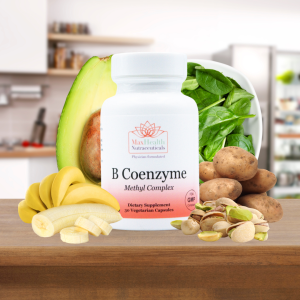
B Coenzyme Methyl Complex
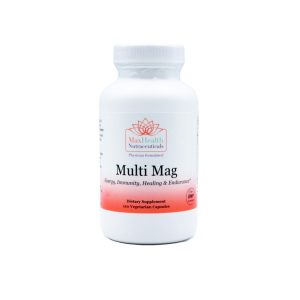
Multi Mag
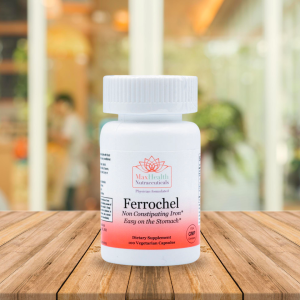
Ferrochel Plus (25mg) 100s

Omega Ultra TG
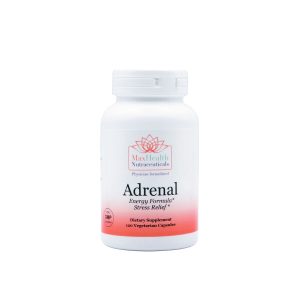
Adrenal (Energy & Stress) 120 Capsules

Estro Balance 60s

PCOS and Endometriosis Support Bundle
Disclosure: This post contains affiliate links. If you purchase through these links, we may earn a small commission at no extra cost to you. Learn more.
About the Author
Dr. Nicolle is a double board-certified physician in Family Medicine and Preventive Medicine, with certifications in Functional Medicine and Lifestyle Medicine. She helps busy professionals over 40 optimize their health through root-cause approaches to cardiovascular, hormonal, and metabolic health.
Learn more about Dr. Nicolle →Explore Related Topics
Dive deeper into these connected health areas
Gut Health
Your gut is far more than a digestive organ — it's home to 70% of your immune system, produces key n…
Explore ❤️Metabolic Health
Metabolic health sits at the intersection of blood sugar regulation, cardiovascular function, body c…
Explore 🌸Women's Health
Women's health encompasses a complex interplay of hormonal cycles, reproductive biology, and unique …
Explore 💪Men's Health
Men's health involves a unique interplay of hormonal balance, cardiovascular resilience, metabolic e…
Explore 🧠Mental Health
Mental health is deeply interconnected with hormonal balance, gut health, blood sugar regulation, an…
Explore 📖Skin & Hair Health
Your skin and hair are windows into your internal health. Chronic acne, eczema, psoriasis, and hair …
ExploreReady to Address Your Health Concerns?
Book a Discovery Offer consultation to discuss how our functional medicine approach can help you achieve your health goals.
Book Your Discovery Offer