Body Recomposition After 40: Building Muscle While Losing Fat

- After 40, adults lose 3–8% of muscle mass per decade — resistance training is the ONLY exercise that reverses this
- Aggressive caloric deficits (>25%) cannibalize muscle — use a moderate 15–20% deficit for body recomposition
- Protein needs increase with age: aim for 0.8–1.2 g per pound of bodyweight, spread across 3–4 meals with 30+ g each
- Creatine monohydrate (3–5 g/day) is the most evidence-based supplement for building strength and muscle after 40
A 46-year-old sales director told me he'd been in a caloric deficit for 6 months, doing cardio 5 days a week, and had lost 18 pounds. Sounds like a success story, right? Except when we ran a DEXA scan, he'd lost 10 pounds of muscle and only 8 pounds of fat. His body fat percentage had barely changed. He looked smaller but softer. He was frustrated, his testosterone had dropped, his metabolism had slowed, and he felt worse than when he started.
This is the dark side of conventional weight loss after 40, and I see it constantly. The "eat less, move more" paradigm — without attention to body composition — cannibalizes muscle, crashes hormones, and leaves you metabolically worse off. Body recomposition — simultaneously building (or preserving) muscle while losing fat — is the goal. And after 40, it requires a fundamentally different strategy.
Why Body Composition Matters More Than Scale Weight
After age 30, adults lose approximately 3–8% of muscle mass per decade — a process called sarcopenia that accelerates after 50 (1). Simultaneously, visceral fat tends to accumulate, even in people whose scale weight doesn't change dramatically.
This shift — less muscle, more fat at the same weight — has profound metabolic consequences:
- Each pound of muscle burns ~6 calories/day at rest; each pound of fat burns ~2
- Insulin resistance increases as the muscle-to-fat ratio declines
- Inflammation increases (visceral fat is metabolically active, producing inflammatory cytokines)
- Fall risk and functional decline accelerate
- Resting metabolic rate drops, making future fat loss harder
The scale is the worst tool for tracking body recomposition. A person can gain 5 lbs of muscle and lose 5 lbs of fat — improving their health dramatically — while the scale shows zero change. Track with body measurements, progress photos, DEXA scans, or at minimum, how your clothes fit.
Hormonal Barriers to Body Recomposition After 40
Low Testosterone and Muscle Loss After 40
Testosterone drops ~1–2% per year after age 30 in men. In women, testosterone begins declining in the 30s and drops further during perimenopause. Lower testosterone means:
- Reduced muscle protein synthesis
- Increased fat storage (especially visceral)
- Decreased motivation and drive for physical activity
- Slower recovery from exercise
Chronic Cortisol and Visceral Fat Gain
Chronic stress and cortisol work directly against body recomposition:
- Cortisol promotes muscle catabolism (breakdown)
- Cortisol drives visceral fat accumulation
- Cortisol impairs recovery and sleep
- Cortisol suppresses testosterone and growth hormone
Insulin Resistance: Why Nutrients Don't Build Muscle
Metabolic dysfunction makes it harder to partition nutrients toward muscle and away from fat. Insulin-resistant cells don't respond efficiently to the anabolic signals that drive muscle growth.
Growth Hormone Decline and Slower Recovery
GH decreases ~14% per decade after age 30. It's essential for muscle repair, fat metabolism, and recovery. Poor sleep and chronic stress further suppress GH.
Estrogen Decline and Abdominal Fat in Women Over 40
Estrogen decline during perimenopause and menopause shifts fat distribution from hips/thighs to the abdomen, increases insulin resistance, and reduces the anabolic signaling that supports muscle maintenance.
Resistance Training Protocol for Body Recomposition After 40
Why Resistance Training Is Non-Negotiable
Cardio alone will not achieve body recomposition. In fact, excessive cardio without resistance training accelerates muscle loss and metabolic adaptation. Resistance training is the *only* exercise modality that directly stimulates muscle protein synthesis.
Optimal Strength Training Program for Adults Over 40
Frequency: 3–4 days per week (allow 48–72 hours between training the same muscle group)
Focus: Compound movements that recruit multiple large muscle groups:
- Squats (or leg press)
- Deadlifts (conventional, Romanian, or trap bar)
- Bench press (or push-ups with progressive overload)
- Rows (barbell, dumbbell, or cable)
- Overhead press
- Pull-ups or lat pulldowns
Volume: 10–20 sets per muscle group per week (distributed across 2–3 sessions)
Rep ranges: Vary across the week:
- Heavy days: 4–6 reps (strength/neural adaptation)
- Moderate days: 8–12 reps (hypertrophy sweet spot)
- Light/pump days: 15–20 reps (metabolic stress, joint-friendly)
Progressive overload: The most important principle. You must systematically increase weight, reps, or sets over time. If you're lifting the same weights you lifted 3 months ago, you're not building muscle — you're maintaining.
Recovery matters MORE after 40, not less. Older muscle takes 48–72 hours to fully repair (vs 24–48 hours at age 25). Under-recovering leads to cortisol elevation, testosterone suppression, and injury. Train hard, recover harder.
Cardio for Fat Loss Without Losing Muscle
- Zone 2 cardio (conversational pace, 60–70% max HR): 2–3 sessions/week, 30–45 minutes. This improves mitochondrial function, fat oxidation, and cardiovascular health without compromising muscle.
- HIIT: 1–2 sessions/week maximum. Potent for metabolic conditioning but generates significant recovery demands.
- Avoid: Daily long-duration steady-state cardio (>45 minutes). This elevates cortisol, promotes muscle catabolism, and drives metabolic adaptation (the body becomes extremely efficient at conserving energy).
Nutrition for Body Recomposition: Protein, Calories & Micronutrients
Protein Intake: The Master Variable for Muscle Gain After 40
Protein intake is the single most important nutritional factor for body recomposition after 40.
Target: 0.8–1.2 g per pound of bodyweight daily (or 1.6–2.4 g per kg)
This is significantly higher than the RDA (0.36 g/lb), which is the minimum to prevent deficiency — not the optimal amount for recomposition.
| Body Weight | Daily Protein Target |
|---|---|
| 150 lbs | 120–180 g |
| 180 lbs | 144–216 g |
| 200 lbs | 160–240 g |
Distribution: Spread protein across 3–4 meals, with at least 30–40 g per meal. The muscle protein synthesis response requires a threshold dose of leucine (~2.5 g), which is found in approximately 30 g of high-quality protein.
Timing: A protein-rich meal within 2 hours of resistance training is beneficial but not critical. Total daily intake matters more than precise timing.
Caloric Deficit Strategy for Recomposition (Not Weight Loss)
For recomposition (not just weight loss), the deficit should be moderate:
- Moderate deficit: 15–20% below maintenance (not 30–40%)
- Why?: Aggressive deficits (>25%) dramatically increase muscle loss, cortisol elevation, and metabolic adaptation
- Cycling: Some practitioners use calorie cycling — maintenance or slight surplus on training days, moderate deficit on rest days
- Refeeds: 1–2 days per week at maintenance calories helps prevent metabolic adaptation
Key Micronutrients for Muscle Building and Fat Loss
- Vitamin D: Optimized to 40–60 ng/mL (supports testosterone, muscle function, and insulin sensitivity)
- Magnesium: 400–600 mg/day (muscle contraction, recovery, testosterone)
- Zinc: 15–30 mg/day (testosterone synthesis, immune function)
- Creatine monohydrate: 3–5 g daily (the most evidence-based performance supplement in existence — increases strength, power output, and lean mass in 70%+ of users)
- Omega-3s: 2,000 mg/day EPA+DHA (reduces exercise-induced inflammation, supports recovery)
Sleep and Recovery: The Hidden Driver of Body Recomposition
Sleep is when muscle repair and growth hormone release occur. Inadequate sleep:
- Reduces muscle protein synthesis by up to 18%
- Increases cortisol by 37–45%
- Impairs insulin sensitivity within 4 days
- Reduces testosterone by 10–15% after one week of restriction
Target: 7–9 hours nightly. Non-negotiable for recomposition.
Evidence-Based Supplements for Recovery and Recomposition
| Supplement | Dose | Evidence Level |
|---|---|---|
| Creatine monohydrate | 3–5 g/day | A+ (hundreds of studies, safe, effective) |
| Whey protein | As needed to hit daily target | A+ (convenient, high leucine) |
| Collagen peptides | 10–15 g/day | B+ (supports tendons, joints, skin) |
| Ashwagandha (KSM-66) | 600 mg/day | B+ (reduces cortisol, modestly increases testosterone) |
| Magnesium glycinate | 400–600 mg before bed | A (sleep, recovery, muscle function) |
Body recomposition after 40 requires a fundamentally different approach than the "eat less, move more" paradigm. Prioritize resistance training over cardio, eat sufficient protein (0.8–1.2 g/lb), use a moderate caloric deficit (15–20%), optimize sleep and hormones, and track body composition — not just scale weight. The goal is to change what you're made of, not just how much you weigh.
References
- Volpi E, et al. Muscle tissue changes with aging. Curr Opin Clin Nutr Metab Care. 2004;7(4):405-410. https://doi.org/10.1097/01.mco.0000134362.76653.b2
- Morton RW, et al. A systematic review and meta-analysis of protein supplementation on resistance training-induced gains in muscle mass and strength. Br J Sports Med. 2018;52(6):376-384. https://doi.org/10.1136/bjsports-2017-097608
- Kreider RB, et al. International Society of Sports Nutrition position stand: safety and efficacy of creatine supplementation. J Int Soc Sports Nutr. 2017;14:18. https://doi.org/10.1186/s12970-017-0173-z
Supplements for Weight Management
Clinical-grade picks for this topic

TheraFrost Cold Plunge
$4,988.00

Thera360 PLUS Portable Sauna
$1,428.00

SMART Resistance Training Bundle
$54.99
Affiliate disclosure: The product links below are affiliate links — we may earn a commission at no extra cost to you. Recommendations are based on clinical use, not commissions. Learn more.
Frequently Asked Questions
Common questions about body recomposition after 40: building muscle while losing fat
Recommended Supplements
Professional-grade supplements from my MaxHealth Nutraceuticals line — the same formulas I use in clinical practice.
TheraFrost Cold Plunge
Thera360 PLUS Portable Sauna
SMART Resistance Training Bundle
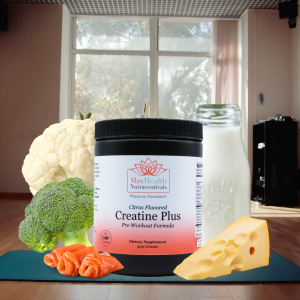
Creatine Plus (Pre Workout Formula)
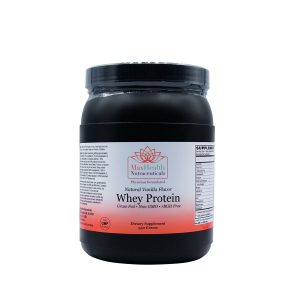
Whey Protein Vanilla 12 oz
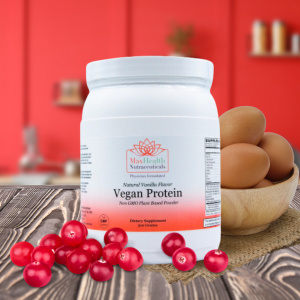
Vegan Protein Vanilla 510 Grams
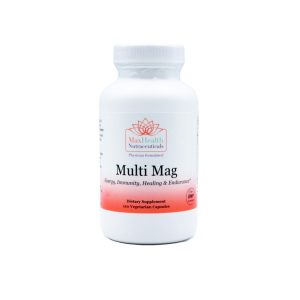
Multi Mag
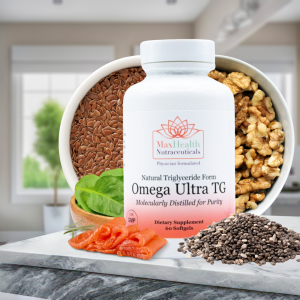
Omega Ultra TG
DHEA 25mg 60s
CoQ10
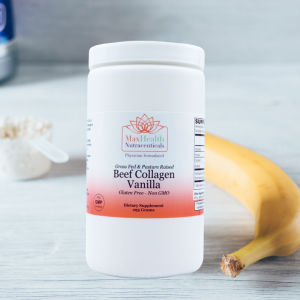
Beef Collagen Vanilla
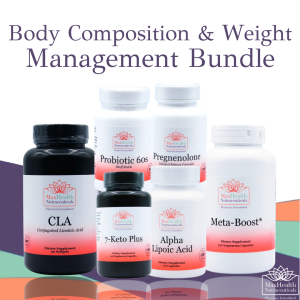
Body Composition & Weight Management Bundle
Disclosure: This post contains affiliate links. If you purchase through these links, we may earn a small commission at no extra cost to you. Learn more.
About the Author
Dr. Nicolle is a double board-certified physician in Family Medicine and Preventive Medicine, with certifications in Functional Medicine and Lifestyle Medicine. She helps busy professionals over 40 optimize their health through root-cause approaches to cardiovascular, hormonal, and metabolic health.
Learn more about Dr. Nicolle →Explore Related Topics
Dive deeper into these connected health areas
Hormone Health
Hormones are the chemical messengers that regulate virtually every process in your body — from metab…
Explore 🦠Gut Health
Your gut is far more than a digestive organ — it's home to 70% of your immune system, produces key n…
Explore 🌸Women's Health
Women's health encompasses a complex interplay of hormonal cycles, reproductive biology, and unique …
Explore 🧠Mental Health
Mental health is deeply interconnected with hormonal balance, gut health, blood sugar regulation, an…
Explore 📖Skin & Hair Health
Your skin and hair are windows into your internal health. Chronic acne, eczema, psoriasis, and hair …
ExploreReady to Address Your Health Concerns?
Book a Discovery Offer consultation to discuss how our functional medicine approach can help you achieve your health goals.
Book Your Discovery Offer