ADHD & Executive Function: A Functional Medicine Guide

- ADHD is a multi-system condition involving dopamine dysfunction, gut health, nutrient deficiencies, inflammation, and sleep disruption — not just a 'chemical imbalance.'
- Up to 75% of adults with ADHD have sleep difficulties that directly impair prefrontal cortex function.
- The gut produces ~50% of the body's dopamine — making gut health a critical but often overlooked driver of attention disorders.
- Key nutrient deficiencies (iron, zinc, magnesium, omega-3s, B vitamins, vitamin D) are consistently found in ADHD populations.
- A 3-phase functional medicine protocol addresses root causes systematically rather than simply managing symptoms with medication.
A patient — a 38-year-old attorney — sat in my office last year and said something I've heard dozens of times: "I'm smart enough. I know I'm smart enough. So why can't I just *do* the things I know I need to do?" She'd been called "lazy" since childhood, despite graduating top of her class. She had seventeen half-finished projects on her desk, three overdue deadlines, and a running internal monologue of self-criticism that never stopped. Her previous doctor had suggested she "try harder" and maybe download a productivity app.
When I ran her labs, her ferritin was 18. Her vitamin D was 22. Her omega-3 index was 3.8%. Her gut was a mess. She didn't need another planner — she needed someone to look at the biology driving her brain.
ADHD (Attention-Deficit/Hyperactivity Disorder) affects an estimated 4.4% of adults in the United States, though many remain undiagnosed well into adulthood — especially women (1). Functional medicine offers a fundamentally different lens: rather than simply managing symptoms with stimulant medications, we ask *why* your brain's executive control networks aren't functioning optimally — and what we can do to restore them.
What Is Executive Function and Why Does It Matter?
Executive function is the brain's "air traffic control system" — a set of cognitive processes managed primarily by the prefrontal cortex that allows you to:
- Plan and prioritize: Organizing tasks by importance and sequencing steps
- Sustain attention: Maintaining focus despite distractions
- Regulate emotions: Managing frustration, impulsivity, and emotional reactivity
- Working memory: Holding information in mind while using it
- Task initiation: Starting tasks without excessive procrastination
- Cognitive flexibility: Shifting between tasks and adapting to new information
When these systems break down, the result isn't laziness — it's neurological dysfunction that affects every area of life.
The Neuroscience: Beyond "Chemical Imbalance"
The conventional model frames ADHD as a dopamine deficiency. While dopamine dysfunction is part of the picture, functional medicine recognizes that ADHD involves multiple interconnected systems:
Dopamine and Norepinephrine
These catecholamines regulate attention, motivation, and reward processing. In ADHD, dopamine signaling in the prefrontal cortex is often impaired — not necessarily because production is low, but because receptor sensitivity, reuptake, or degradation pathways are altered (2).
The Gut-Brain Axis
Your gut microbiome produces approximately 50% of your body's dopamine and 95% of serotonin. Dysbiosis, SIBO, and intestinal permeability directly impact neurotransmitter production and neuroinflammation — making gut health a critical and often overlooked driver of attention disorders (3).
Neuroinflammation
Chronic inflammation damages the delicate neural circuits responsible for executive function. Elevated inflammatory markers (IL-6, TNF-α, CRP) are consistently found in ADHD research, suggesting that reducing inflammation may improve cognitive function independently of stimulant medication (4).
Many adults with ADHD also have undiagnosed gut issues, food sensitivities, or nutrient deficiencies. Addressing these "upstream" causes can dramatically improve focus and executive function — sometimes reducing or eliminating the need for medication.
Root Causes: The Functional Medicine Framework
I'll be honest — when I first started seeing ADHD patients through a functional medicine lens, I was surprised by how often the "obvious" nutritional deficiencies had been completely ignored. Now, after working with hundreds of patients, I'm not surprised anymore. I expect it.
1. Nutrient Deficiencies
Several nutrients are critical for dopamine synthesis, myelination, and prefrontal cortex function:
- Iron: Essential cofactor for dopamine synthesis via tyrosine hydroxylase. Low ferritin (even within "normal" range) is strongly associated with ADHD severity (5)
- Zinc: Modulates dopamine transport and melatonin metabolism. Zinc deficiency is found in up to 30% of ADHD children
- Magnesium: Regulates NMDA receptors, calms neural excitability, and supports sleep quality
- Omega-3 fatty acids: DHA is critical for neuronal membrane fluidity and prefrontal cortex development
- B vitamins: B6 (P5P) is a direct cofactor in dopamine and serotonin synthesis
- Vitamin D: Modulates dopamine pathways and is frequently deficient in ADHD populations
2. Blood Sugar Dysregulation
The brain consumes 20% of your glucose supply. Blood sugar instability — from skipping meals, high-glycemic diets, or insulin resistance — causes attention crashes, irritability, and impulsivity that mimic or worsen ADHD symptoms.
3. Sleep Disruption
Up to 75% of adults with ADHD have sleep difficulties. Poor sleep impairs prefrontal cortex function, reduces dopamine receptor sensitivity, and worsens every dimension of executive function. Addressing sleep and hormonal connections is often the highest-yield intervention.
4. Thyroid Dysfunction
Thyroid imbalances — particularly subclinical hypothyroidism — can produce symptoms indistinguishable from ADHD: brain fog, poor concentration, fatigue, and emotional dysregulation.
5. Environmental Toxins
Heavy metals (lead, mercury), pesticides, and endocrine disruptors are neurotoxic and have been linked to increased ADHD risk and severity.
| Root Cause | Key Markers to Test | Impact on ADHD |
|---|---|---|
| Nutrient Deficiencies | Ferritin, RBC zinc, RBC magnesium, vitamin D, B12, omega-3 index | Impaired dopamine synthesis and neural signaling |
| Gut Dysbiosis | Comprehensive stool analysis, SIBO breath test | Reduced neurotransmitter production, neuroinflammation |
| Blood Sugar Instability | Fasting insulin, HbA1c, CGM data | Attention crashes, impulsivity, mood swings |
| Thyroid Dysfunction | TSH, free T3, free T4, thyroid antibodies | Brain fog, fatigue, poor concentration |
| Environmental Toxins | Heavy metals panel, organic acids test | Direct neurotoxicity, oxidative stress |
The Functional Medicine Protocol for ADHD
Here's the protocol I walk my patients through — and I want to be clear: this isn't about replacing medication. Some of my ADHD patients thrive on stimulants, and I support that. But every single one benefits from addressing the biology underneath. The ones who do both? That's where I see the biggest transformations.
Phase 1: Stabilize the Foundation (Weeks 1–4)
- Stabilize blood sugar: Protein-rich breakfast within 1 hour of waking, balanced meals every 3–4 hours
- Optimize sleep: Consistent wake time, blue light reduction, magnesium supplementation before bed
- Eliminate processed food: Remove artificial colors, preservatives, and high-glycemic processed foods
- Begin targeted supplementation: Omega-3s (2,000+ mg EPA/DHA), magnesium glycinate, vitamin D
Phase 2: Address Root Causes (Weeks 4–12)
- Correct nutrient deficiencies based on lab results (iron, zinc, B vitamins)
- Heal the gut: Address dysbiosis, SIBO, or intestinal permeability with appropriate protocols
- Reduce inflammation: Anti-inflammatory diet, curcumin, NAC
- Support dopamine pathways: Tyrosine, P5P, iron (if deficient)
Phase 3: Optimize and Maintain (Months 3–6+)
- Refine supplementation based on symptom response
- Implement executive function strategies alongside biochemical optimization
- Address stress and cortisol patterns that worsen attention
- Consider genetic testing (COMT, MTHFR, MAO) for personalized neurotransmitter support
ADHD is not a character flaw or a simple "chemical imbalance." It's a complex, multi-system condition with identifiable root causes — and functional medicine provides the tools to address each one systematically.
References
- Kessler RC, Adler L, Barkley R, et al. The prevalence and correlates of adult ADHD in the United States. American Journal of Psychiatry. 2006;163(4):716-723.
- Volkow ND, Wang GJ, Kollins SH, et al. Evaluating dopamine reward pathway in ADHD. JAMA. 2009;302(10):1084-1091.
- Aarts E, Ederveen TH, Naaijen J, et al. Gut microbiome in ADHD and its relation to neural reward anticipation. PLoS ONE. 2017;12(9):e0183509.
- Anand D, Colpo GD, Zeni G, et al. Attention-deficit/hyperactivity disorder and inflammation. Biomarkers in Neuropsychiatry. 2017;2:100006.
- Konofal E, Lecendreux M, Arnulf I, et al. Iron deficiency in children with ADHD. Archives of Pediatrics & Adolescent Medicine. 2004;158(12):1113-1115.
- Bloch MH, Qawasmi A. Omega-3 fatty acid supplementation for the treatment of children with ADHD. Journal of the American Academy of Child & Adolescent Psychiatry. 2011;50(10):991-1000.
- Rucklidge JJ, Frampton CM, Gorman B, et al. Vitamin-mineral treatment of ADHD in adults. British Journal of Psychiatry. 2014;204(4):306-315.
Supplements for Mental Wellness
Clinical-grade picks for this topic
Affiliate disclosure: The product links below are affiliate links — we may earn a commission at no extra cost to you. Recommendations are based on clinical use, not commissions. Learn more.
Frequently Asked Questions
Common questions about adhd & executive function: a functional medicine guide
Recommended Supplements
Professional-grade supplements from my MaxHealth Nutraceuticals line — the same formulas I use in clinical practice.

Austin Air HealthMate Plus®
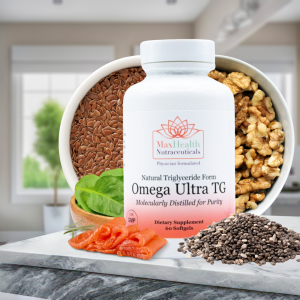
Omega Ultra TG
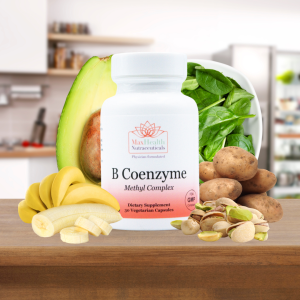
B Coenzyme Methyl Complex
Multi Mag
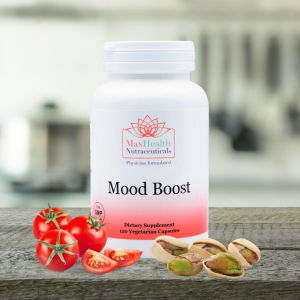
Mood Boost 120s

5-HTP 90s (with P5P & Glycine)

Cortex Super Strength 120s

Cognicare Support 120s
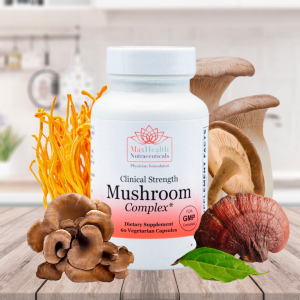
Mushroom Complex 60s

Mindset & Mood Support Bundle
Disclosure: This post contains affiliate links. If you purchase through these links, we may earn a small commission at no extra cost to you. Learn more.
About the Author
Dr. Nicolle is a double board-certified physician in Family Medicine and Preventive Medicine, with certifications in Functional Medicine and Lifestyle Medicine. She helps busy professionals over 40 optimize their health through root-cause approaches to cardiovascular, hormonal, and metabolic health.
Learn more about Dr. Nicolle →Explore Related Topics
Dive deeper into these connected health areas
Hormone Health
Hormones are the chemical messengers that regulate virtually every process in your body — from metab…
Explore 🦠Gut Health
Your gut is far more than a digestive organ — it's home to 70% of your immune system, produces key n…
Explore ❤️Metabolic Health
Metabolic health sits at the intersection of blood sugar regulation, cardiovascular function, body c…
Explore 🌸Women's Health
Women's health encompasses a complex interplay of hormonal cycles, reproductive biology, and unique …
Explore 💪Men's Health
Men's health involves a unique interplay of hormonal balance, cardiovascular resilience, metabolic e…
Explore 📖Skin & Hair Health
Your skin and hair are windows into your internal health. Chronic acne, eczema, psoriasis, and hair …
ExploreReady to Address Your Health Concerns?
Book a Discovery Offer consultation to discuss how our functional medicine approach can help you achieve your health goals.
Book Your Discovery Offer