Longevity & Healthy Aging: Evidence-Based Strategies

- The average American spends the last 12–15 years of life managing chronic disease — functional medicine aims to close the gap between lifespan and healthspan.
- Nine interconnected hallmarks drive biological aging, including mitochondrial dysfunction, cellular senescence, and chronic inflammation.
- Insulin resistance is arguably the single most important accelerator of aging, driving inflammation and virtually every age-related disease.
- VO2 max is the single strongest predictor of all-cause mortality — making cardiovascular fitness a top longevity priority.
- Biological age can be measured through epigenetic clocks and inflammatory markers — and dramatically influenced by lifestyle interventions.
I have a patient who's 74 and does things most 40-year-olds can't — she deadlifts, she hikes fourteeners, she reads voraciously, and she runs a small business. I also have patients in their 50s who move like they're 80 — stiff, foggy, exhausted, and resigned to decline. The difference isn't genetics. It's almost never genetics. It's the accumulated effect of daily choices compounding over decades. That's both the bad news and the extraordinarily good news, because it means the trajectory is modifiable at almost any age.
The question isn't just how long you'll live — it's how well you'll live. The gap between lifespan (total years alive) and healthspan (years lived in good health) is widening: the average American spends the last 12–15 years of life managing chronic disease, disability, and declining function (1). Functional medicine offers a fundamentally different approach to aging — one focused on extending healthspan by addressing the root mechanisms that drive biological aging.
The Hallmarks of Aging
Research has identified nine interconnected hallmarks that drive the aging process (2):
1. Genomic instability: Accumulated DNA damage from oxidative stress and environmental toxins
2. Telomere attrition: Shortening of protective chromosome caps with each cell division
3. Epigenetic alterations: Changes in gene expression that accelerate aging
4. Loss of proteostasis: Accumulation of misfolded proteins
5. Deregulated nutrient sensing: Dysfunction in insulin, mTOR, AMPK, and sirtuin pathways
6. Mitochondrial dysfunction: Declining energy production and increasing oxidative stress
7. Cellular senescence: Accumulation of "zombie cells" that secrete inflammatory compounds
8. Stem cell exhaustion: Reduced regenerative capacity
9. Altered intercellular communication: Chronic low-grade inflammation ("inflammaging")
Your biological age and chronological age are not the same. Biological aging can be measured through epigenetic clocks, telomere length, and inflammatory markers — and it can be dramatically influenced by lifestyle interventions.
The Longevity Levers
1. Metabolic Health: The Foundation
Insulin resistance is arguably the single most important accelerator of aging. It drives inflammation, oxidative stress, mTOR overactivation, and virtually every age-related disease:
- Maintain fasting insulin below 5 μIU/mL
- Optimize blood sugar stability
- Consider intermittent fasting (activates autophagy, AMPK, and sirtuins)
- Target HbA1c below 5.3%
2. Inflammation: The Common Denominator
Chronic low-grade inflammation ("inflammaging") is the thread connecting every age-related disease:
- Anti-inflammatory nutrition: Mediterranean-pattern diet rich in polyphenols, omega-3s, and fiber
- Omega-3 fatty acids (2,000–3,000 mg EPA/DHA daily)
- Curcumin (1,000–2,000 mg with piperine)
- Regular monitoring: hs-CRP < 1.0 mg/L, homocysteine < 8 μmol/L
3. Mitochondrial Health
Your mitochondria are the energy factories of every cell. As they decline, so does your vitality, cognitive function, and disease resistance:
- CoQ10 (200–400 mg daily) — essential for electron transport chain function
- NAD+ support: NMN (250–500 mg) or NR (300–600 mg) to restore declining NAD+ levels
- Exercise: The most powerful mitochondrial stimulus (both resistance and aerobic)
- Chronic fatigue and mitochondrial health — a critical connection
4. Exercise: The Longevity Drug
No pharmaceutical matches exercise for anti-aging effects:
- Resistance training (3x/week minimum): Prevents sarcopenia, maintains bone density, improves insulin sensitivity
- Zone 2 cardio (150+ min/week): Builds mitochondrial density, improves cardiovascular health
- VO2 max training (1–2x/week): The single strongest predictor of all-cause mortality
- Exercise and hormonal connections: Maintains testosterone, growth hormone, and metabolic health
5. Sleep: The Recovery Engine
Poor sleep accelerates every hallmark of aging:
- Target 7–8.5 hours consistently
- Prioritize sleep quality (deep sleep and REM)
- Address sleep-hormone connections
- Monitor and optimize HRV as a recovery metric
6. Gut Health: The Immune Command Center
Your gut microbiome changes dramatically with age — and this shift drives immune dysfunction:
- Maintain microbial diversity through fiber-rich, varied diet
- Regular probiotic support
- Address gut inflammation promptly
| Marker | Optimal Range | Why It Matters |
|---|---|---|
| Fasting Insulin | < 5 μIU/mL | Insulin resistance drives every hallmark of aging |
| hs-CRP | < 1.0 mg/L | Marker of systemic inflammation |
| HbA1c | < 5.3% | Long-term glucose regulation |
| Homocysteine | < 8 μmol/L | Cardiovascular and cognitive risk |
| Vitamin D | 60–80 ng/mL | Immune function, bone health, cancer risk |
| ApoB | < 80 mg/dL | Most accurate cardiovascular risk marker |
7. Hormonal Optimization
Hormonal decline accelerates aging in both men and women:
- Testosterone optimization (men): Maintains muscle, bone, cognition, and metabolic health
- Estrogen and progesterone balance (women): Cardioprotective, neuroprotective, bone-protective
- Thyroid optimization: Drives metabolic rate and cellular energy
- Growth hormone / IGF-1: Maintained through exercise, sleep, and fasting
Longevity isn't about adding years to your life — it's about adding life to your years. The most impactful interventions are the most accessible: metabolic health, exercise, sleep, anti-inflammatory nutrition, and stress management.
References
- Crimmins EM, Beltrán-Sánchez H. Mortality and morbidity trends: is there compression of morbidity? Journal of Gerontology. 2011;66B(1):75-86.
- López-Otín C, Blasco MA, Partridge L, et al. The hallmarks of aging. Cell. 2013;153(6):1194-1217.
- Fontana L, Partridge L, Longo VD. Extending healthy life span — from yeast to humans. Science. 2010;328(5976):321-326.
- Mattson MP, Longo VD, Harvie M. Impact of intermittent fasting on health and disease processes. Ageing Research Reviews. 2017;39:46-58.
- Mandsager K, Harb S, Cremer P, et al. Association of cardiorespiratory fitness with long-term mortality among adults. JAMA Network Open. 2018;1(6):e183605.
- Belsky DW, Caspi A, Houts R, et al. Quantification of biological aging in young adults. PNAS. 2015;112(30):E4104-E4110.
Supplements for Stress & Recovery
Clinical-grade picks for this topic

Inner Balance™ Coherence Plus
$249.00

Thera360 PLUS Portable Sauna
$1,428.00

SMART Resistance Training Bundle
$54.99
Affiliate disclosure: The product links below are affiliate links — we may earn a commission at no extra cost to you. Recommendations are based on clinical use, not commissions. Learn more.
Frequently Asked Questions
Common questions about longevity & healthy aging: evidence-based strategies
Recommended Supplements
Professional-grade supplements from my MaxHealth Nutraceuticals line — the same formulas I use in clinical practice.
Inner Balance™ Coherence Plus
Thera360 PLUS Portable Sauna
SMART Resistance Training Bundle
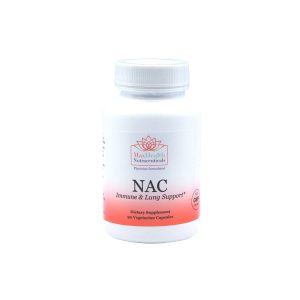
NAC 90s
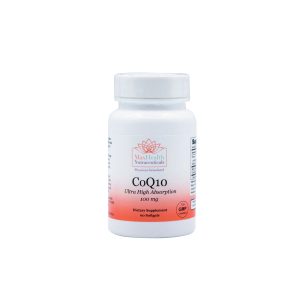
CoQ10
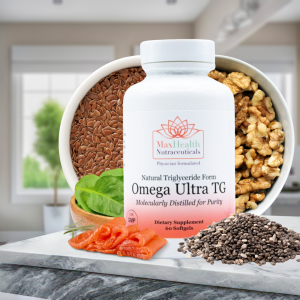
Omega Ultra TG
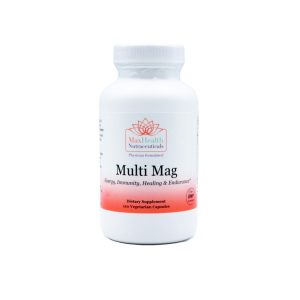
Multi Mag
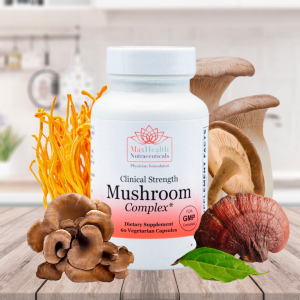
Mushroom Complex 60s
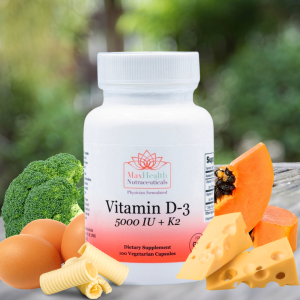
Vitamin D3 5000 IU + K2 CAPSULES 100s
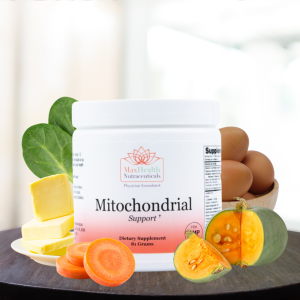
Mitochondrial Support
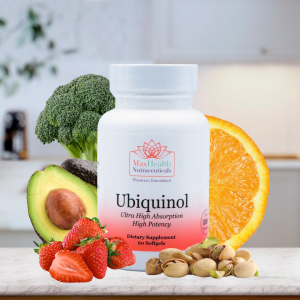
Ubiquinol 100mg 60s
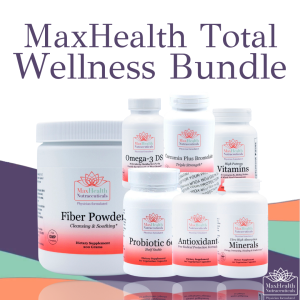
MaxHealth Total Wellness Bundle
Disclosure: This post contains affiliate links. If you purchase through these links, we may earn a small commission at no extra cost to you. Learn more.
About the Author
Dr. Nicolle is a double board-certified physician in Family Medicine and Preventive Medicine, with certifications in Functional Medicine and Lifestyle Medicine. She helps busy professionals over 40 optimize their health through root-cause approaches to cardiovascular, hormonal, and metabolic health.
Learn more about Dr. Nicolle →Explore Related Topics
Dive deeper into these connected health areas
Hormone Health
Hormones are the chemical messengers that regulate virtually every process in your body — from metab…
Explore 🦠Gut Health
Your gut is far more than a digestive organ — it's home to 70% of your immune system, produces key n…
Explore 🌸Women's Health
Women's health encompasses a complex interplay of hormonal cycles, reproductive biology, and unique …
Explore 💪Men's Health
Men's health involves a unique interplay of hormonal balance, cardiovascular resilience, metabolic e…
Explore 🧠Mental Health
Mental health is deeply interconnected with hormonal balance, gut health, blood sugar regulation, an…
Explore 📖Skin & Hair Health
Your skin and hair are windows into your internal health. Chronic acne, eczema, psoriasis, and hair …
ExploreReady to Address Your Health Concerns?
Book a Discovery Offer consultation to discuss how our functional medicine approach can help you achieve your health goals.
Book Your Discovery Offer